


How to Launch a Private Label Automotive LED Lighting Brand: An OEM/ODM Roadmap for Distributors
- Quick Answer
- 1. Choose the Market and Score Your First SKUs
- Use Hero, Support, and Test SKUs
- First-SKU Decision Matrix
- 2. Choose the Minimum Development Level You Actually Need
- Private Label: Start With a Suitable Existing Platform
- OEM: Modify a Defined Requirement
- ODM: Develop Meaningful Technical Differentiation
- 3. Build a Manufacturer-Ready Project Brief
- Define the Product and Application
- Define the Technical Requirements
- Define Branding Separately From Engineering
- Define the Commercial Scope
- RFQ Readiness Checklist
- 4. Validate the Manufacturer With Evidence, Not Claims
- Verify Electronics Manufacturing Control
- Verify Optical Capability
- Verify Driver, CANBUS, and Electrical Capability
- Verify Thermal and Environmental Validation
- Supplier Evidence Matrix
- Supplier Red Flags
- 5. Validate, Approve, and Freeze the Product Before Mass Production
- Validate Fitment and Installation
- Validate Electrical and CANBUS Behavior
- Validate Optical Performance
- Validate Thermal and Environmental Performance
- Approve Branding and Packaging Separately
- Sample Acceptance Matrix
- Establish an Approved Production Reference
- Freeze the Production Specification
- Confirm Compliance for the Exact Product and Market
- 6. Control First Production and Every Repeat Order
- Maintain Exact Product Versions
- Classify Engineering Changes
- Use Engineering Change Notification
- Verify Batch Consistency
- Feed Field Data Back Into SKU Decisions
- What Is the Real Cost of Launching a Private Label Automotive LED Product?
- What Affects MOQ and Lead Time?
- Common Private Label Automotive LED Launch Mistakes
- Private Label Automotive LED Brand Launch Checklist
- Market & SKU
- Development
- Manufacturer Validation
- Product Approval
- Production Control
- Repeat Orders
- Frequently Asked Questions
- Can a private-label automotive LED product use an existing housing but a different driver?
- When does a product change require a new sample?
- What should an engineering change notification include?
- How should I choose the first SKUs for my automotive LED brand?
- What should I test before approving an automotive LED sample?
- How can I maintain product consistency across repeat orders?
- From Product Idea to a Controlled Private Label Program
Quick Answer
Launching a private label automotive LED lighting brand is not simply a matter of putting your logo on an existing bulb. A controlled program starts by choosing the right market and first SKUs, then moves through the appropriate level of private-label, OEM, or ODM development, a clear project brief, supplier verification, sample approval, production-version control, and repeat-order management.
For distributors, importers, wholesalers, and aftermarket brands, many problems begin when these decisions happen in the wrong order. Too many SKUs can create inventory and support complexity before demand has been proven. Deep ODM development can consume engineering resources before the market is validated. A technically impressive sample can still become a poor commercial product if fitment, CANBUS behavior, beam performance, packaging, or future version control are not defined.
A practical launch process can therefore be reduced to six stages: Market & SKU Strategy → Development Level → Project Brief → Manufacturer Validation → Product Approval → Production & Repeat Orders.
1. Choose the Market and Score Your First SKUs
The first question is not which factory should we contact? It is which customer, application, and product should the brand launch first?
An automotive LED product sold through a specialist workshop can require a different level of fitment support, technical explanation, packaging, and after-sales service from the same product sold through e-commerce or a regional distributor. The product line should therefore start with the buyer and application—not with a supplier catalog.
CARNEON's current active automotive lighting categories include LED headlight bulbs and exterior and interior LED lights, including turn/brake, signal, and interior lighting categories. A private-label project can use these product categories as a starting point, but a first launch does not need to include every available SKU.
Use Hero, Support, and Test SKUs
A practical first product portfolio can be divided into three roles:
- Hero SKUs are the products expected to carry the brand's main commercial message and sales volume.
- Support SKUs expand useful application coverage around the core products.
- Test SKUs allow the distributor to evaluate a new segment before committing to deeper inventory or product development.
The objective is not to create the largest catalog. The objective is to create a product range that can be sold, stocked, supported, validated, and reordered consistently.
First-SKU Decision Matrix
| Decision Factor | Buyer Question | Positive Signal |
|---|---|---|
| Market demand | Is there a clear buyer and use case? | Demand is identifiable and repeatable. |
| Application coverage | Does the SKU serve an important vehicle/application segment? | Commercially meaningful coverage. |
| Compatibility complexity | How difficult will fitment, electrical, or CANBUS support be? | Manageable support risk. |
| Differentiation | Can the SKU support the intended brand position? | Clear commercial or technical value. |
| Inventory risk | Will it fragment inventory across too many versions? | Manageable stock structure. |
| After-sales risk | Is it likely to generate frequent installation or compatibility issues? | Support burden is controllable. |
A high-demand SKU with manageable compatibility risk is usually a stronger first Hero SKU than a highly customized product whose market demand has not yet been proven.
Choose the SKU with the best balance of demand, differentiation, supportability, and risk—not the SKU with the most complicated specification.
2. Choose the Minimum Development Level You Actually Need
Private label, OEM, and ODM should not be treated as status labels. The useful question is: How much product development does this SKU actually require?
| Project Situation | Typical Route |
|---|---|
| An existing product already fits the market and mainly needs branding. | Private Label |
| The platform is suitable but the buyer has defined specification changes. | OEM |
| Meaningful structural, electrical, thermal, or optical differentiation is required. | ODM |
| A unique housing or dedicated tooling is required. | Custom Development |
Private Label: Start With a Suitable Existing Platform
Private label is appropriate when an existing product already matches the target application and the main requirement is branding. CARNEON's current OEM/ODM design services include branding-related options such as laser-engraved logos, customized color boxes, and manuals.
OEM: Modify a Defined Requirement
OEM development is more appropriate when the buyer already knows what needs to change. Depending on the project, the required changes may involve:
- output;
- beam pattern;
- color temperature;
- housing or surface finish;
- PCB configuration;
- driver behavior;
- vehicle compatibility.
ODM: Develop Meaningful Technical Differentiation
ODM becomes relevant when differentiation requires engineering rather than branding alone. CARNEON's current design scope includes:
- private-mold housings;
- thermal and structural engineering;
- custom PCB development;
- intelligent drivers;
- CANBUS decoding;
- EMC anti-interference measures;
- over-voltage protection;
- optical development.
Do not choose ODM because it sounds more advanced. Choose it only when meaningful differentiation requires engineering work.
3. Build a Manufacturer-Ready Project Brief
A useful automotive LED RFQ needs more than a product photo and a request for the lowest price. The manufacturer should understand the application, product requirement, customization scope, commercial scope, and required validation before giving a meaningful quotation.
Define the Product and Application
- product category;
- reference product if available;
- intended vehicle or application;
- base or connector;
- installation constraints;
- target use case.
Define the Technical Requirements
Avoid vague descriptions such as “very bright,” “good cooling,” “universal CANBUS,” “waterproof,” or “high quality.” Depending on the product, define the areas that actually matter:
- output requirement;
- beam pattern;
- color temperature;
- thermal behavior;
- driver performance;
- CANBUS compatibility;
- EMC considerations;
- over-voltage protection;
- environmental resistance.
Define Branding Separately From Engineering
Branding may include logo, housing appearance, surface finish, labels, color boxes, and manuals. Engineering may include private molds, PCB changes, driver development, thermal changes, structural changes, or optical changes.
This distinction matters because a product can be technically approved while packaging is still being revised—and attractive packaging does not mean the technical product is ready for production.
Define the Commercial Scope
- target market;
- initial SKU count;
- estimated quantity;
- sample requirements;
- required documentation;
- target launch schedule.
MOQ and development lead time should be confirmed for the specific project rather than treated as fixed universal numbers. They can change with SKU count, customization depth, tooling, packaging, component requirements, prototype iterations, validation, and production scheduling. For deeper procurement planning, see the automotive LED MOQ and lead time guide.
RFQ Readiness Checklist
- What product are we sourcing?
- Which vehicle or application is it for?
- Which market will we sell into?
- How many initial SKUs are planned?
- What quantity are we evaluating?
- What requires customization?
- Which technical requirements matter?
- Which documents are required?
- What is the target launch date?
4. Validate the Manufacturer With Evidence, Not Claims
Supplier evaluation should focus on evidence that can be traced to the exact product being quoted or approved. “High quality,” “high brightness,” “excellent cooling,” and “wide compatibility” are claims. A buyer needs evidence.
More importantly, that evidence should be connected to the same product version, configuration, and test condition that the buyer is evaluating.
Verify Electronics Manufacturing Control
CARNEON's current automotive LED manufacturing capabilities include high-speed SMT placement, soldering and thermal bonding, driver programming, and electronics inspection.
- Which PCB revision is in the sample?
- Which driver version is being quoted?
- Will the same configuration be used in mass production?
- How are component or firmware changes recorded?
Verify Optical Capability
CARNEON's current manufacturing information includes optical laboratory functions such as lens alignment, beam-pattern calibration, lumen and color-temperature verification, and real-vehicle road testing.
For projects involving road-illumination devices in markets applying UNECE vehicle regulations, buyers can also review UN Regulation No. 149 on Road Illumination Devices to understand the regulatory framework for relevant headlamps, front fog lamps, and other covered road-illumination devices.
The buyer should ask for evidence that can be traced to the product being evaluated:
- exact product version;
- test setup;
- test condition;
- beam or output result;
- revision or date.
Verify Driver, CANBUS, and Electrical Capability
CARNEON's design and manufacturing scope includes custom PCB development, intelligent drivers, CANBUS decoding, CANBUS compatibility testing, EMC anti-interference measures, and over-voltage protection.
Where electromagnetic compatibility is relevant to the target market, buyers can refer to UN Regulation No. 10 on electromagnetic compatibility as an official UNECE reference for vehicles and electrical/electronic components intended for vehicle installation.
- Which application was tested?
- Which product version was tested?
- Which driver or PCB configuration was used?
- What compatibility boundaries are known?
- What happens if the electronics are revised?
Verify Thermal and Environmental Validation
CARNEON's current factory information also includes waterproof simulation, water testing, submersion testing, elevated-temperature simulation, vibration testing, and aging activities. The useful question is not simply whether the supplier has a test, but whether the test applies to the exact product configuration being approved.
Supplier Evidence Matrix
| Supplier Claim | Evidence to Request | Traceability Requirement |
|---|---|---|
| High brightness | Output and beam evidence under defined conditions | Exact product configuration |
| Good beam pattern | Beam reference or optical test | Housing, LED, and optical configuration |
| CANBUS compatible | Tested application and behavior | Driver and PCB version |
| Good cooling | Thermal test or validation result | Complete thermal configuration |
| Waterproof | Defined test method and result | Product version tested |
| Certified | Exact model, report, standard, and scope | Product/model match |
| Stable mass production | Revision and batch-control process | Production version record |
For important technical claims, the buyer should be able to connect Evidence → Product Version → Test Condition → Result → Applicable Configuration.
Supplier Red Flags
- The supplier cannot identify the exact quoted product version.
- The sample configuration differs from the quotation without explanation.
- Only nominal lumen is provided without defined test conditions.
- CANBUS claims have no application boundary.
- PCB or driver revisions change without notification.
- An old report is reused after a meaningful technical change.
- Packaging is finalized while the technical product is still changing.
- Repeat orders cannot be linked to the previous production configuration.
5. Validate, Approve, and Freeze the Product Before Mass Production
A sample should not be approved simply because it looks bright or works on one test vehicle. Approval should be based on criteria that are either measurable or traceable to an approved reference.
Validate Fitment and Installation
- connector or base;
- housing clearance;
- installation space;
- mechanical fit;
- target vehicle/application.
Validate Electrical and CANBUS Behavior
- driver stability;
- electrical behavior;
- CANBUS interaction where relevant;
- vehicle integration;
- EMC-related behavior where applicable;
- voltage protection requirements.
Validate Optical Performance
Automotive lighting should not be approved on headline brightness alone. CARNEON's current factory information includes beam-pattern calibration, lumen/lux-related measurement, anti-glare optimization, and road testing.
For LED headlights in particular, beam shape, alignment, glare control, and usable illumination may matter more than a single marketing lumen figure. See the related guide on LED headlight brightness and beam pattern testing.
Validate Thermal and Environmental Performance
The thermal system should be evaluated as part of the complete product: LED source + PCB + driver + housing + thermal path + operating condition.
If the driver, PCB, LED source, housing, or thermal component changes later, the original thermal result may need to be reviewed. Where relevant, environmental validation can also include waterproof behavior, vibration, or other project-specific conditions.
Approve Branding and Packaging Separately
- logo;
- finish;
- label;
- color box;
- manual;
- packaging information.
Do not treat packaging as final while the technical product version is still changing. Otherwise, the brand may end up with packaging that describes a configuration that is no longer being produced.
Sample Acceptance Matrix
| Validation Item | Acceptance Question | Evidence / Reference | Rework Trigger |
|---|---|---|---|
| Fitment | Does the product install correctly in the intended application? | Approved vehicle/application reference | Clearance, connector, or installation issue |
| Electrical | Does it operate consistently under defined conditions? | Driver/product version + test reference | Instability or electrical error |
| CANBUS | Does behavior match the target application? | Tested application + configuration | Error, flicker, or incompatibility |
| Optical | Does it meet the agreed beam/output reference? | Approved beam image or test result | Glare, misalignment, or unacceptable pattern |
| Thermal | Is operation stable under the agreed condition? | Test configuration + result | Thermal instability |
| Branding | Does appearance match approved artwork? | Approved artwork/sample | Logo, color, or finish mismatch |
| Packaging | Does it match the approved market version? | Packaging revision | Wrong language, label, manual, or version |
Before PO approval, subjective requirements such as “good beam,” “high brightness,” “stable driver,” “correct color,” or “acceptable appearance” should be converted into either a measurable requirement or an approved reference.
Establish an Approved Production Reference
Before mass production, the buyer and manufacturer should establish an approved production reference, sometimes described as a golden sample. For automotive LED products, this should not mean only keeping one physical sample.
- exact product model;
- PCB revision;
- driver version;
- LED configuration;
- housing and thermal configuration;
- connector/base;
- optical reference;
- CANBUS behavior;
- branding revision;
- packaging revision.
Two products can look identical externally while containing different electronics or thermal components. The approved reference therefore needs to describe the configuration, not only the appearance.
Freeze the Production Specification
- product version;
- PCB and driver;
- LED configuration;
- optical reference;
- fitment;
- CANBUS requirement;
- thermal configuration;
- branding;
- packaging;
- acceptance criteria.
Confirm Compliance for the Exact Product and Market
Compliance should be verified at product and model level. CARNEON maintains a certificates section, but buyers should verify exact scope rather than assume one company-level document applies to every SKU.
For products intended for the U.S. market, buyers should separately review the applicable FMVSS No. 108 requirements for lamps, reflective devices, and associated equipment rather than assume documentation used for another market is sufficient.
A useful verification chain is: Product / Model → Report → Standard → Scope → Target Market. If a meaningful electrical, optical, structural, or electronic change is made after testing, confirm whether the existing documentation still applies.
6. Control First Production and Every Repeat Order
A private-label program does not end when the first shipment leaves the factory. The long-term question is: Can the next batch be produced as the same controlled product?
Maintain Exact Product Versions
- PCB revision;
- driver;
- LED configuration;
- housing;
- connector;
- thermal component;
- branding;
- packaging revision.
Classify Engineering Changes
| Change Class | Example | Typical Control |
|---|---|---|
| Cosmetic change | Packaging artwork or non-functional visual change | Review and artwork approval |
| Component change | PCB, driver, LED source, connector | Technical review and possible sample |
| Functional change | Electrical, CANBUS, thermal, or optical behavior | Revalidation normally required |
| Compliance-relevant change | Change that may affect a tested or documented configuration | Documentation and compliance review |
The exact classification should be adapted to the product and quality system, but the principle is important: the required review should match the technical significance of the change.
Use Engineering Change Notification
- What changed?
- Why did it change?
- Which product/version is affected?
- Which previous approval is affected?
- Does a new sample need to be approved?
- Does the product need revalidation?
- Do existing reports or documents still apply?
A practical control path is: Change → Risk Classification → Review → Sample if required → Revalidation if required → Updated Version Record.
Verify Batch Consistency
CARNEON's current factory information includes material tracking, electronics inspection, assembly calibration, aging, and QC activities. For the buyer, these processes should ultimately support one question: Is the new production batch consistent with the approved production reference?
Feed Field Data Back Into SKU Decisions
Warranty claims, returns, installation questions, CANBUS complaints, compatibility problems, thermal issues, and failure patterns should feed back into the product strategy.
This creates a continuous product-management loop: Market → SKU → Development → Validation → Production → Field Data → Better SKU Decisions.
What Is the Real Cost of Launching a Private Label Automotive LED Product?
Unit price is only one part of the launch cost.
Total Launch Cost = Product + Engineering + Tooling + Samples + Validation + Packaging + Inventory + Logistics + Quality Risk + After-Sales
A private-label project using an existing product platform will have a different cost structure from a project requiring a private mold, driver changes, PCB development, optical work, or additional validation. The lowest quoted unit price therefore does not necessarily create the lowest total launch cost.
What Affects MOQ and Lead Time?
MOQ and lead time should be confirmed for the specific project. Common variables include:
- SKU count;
- customization depth;
- tooling requirements;
- packaging;
- component requirements;
- prototype iterations;
- validation;
- production scheduling.
Common Private Label Automotive LED Launch Mistakes
| Mistake | Why It Creates Risk |
|---|---|
| Starting with too many SKUs | Increases inventory, packaging, validation, and support complexity. |
| Choosing ODM before validating demand | Creates engineering investment before market validation. |
| Selecting a supplier only by unit price | Ignores technical, quality, and after-sales risk. |
| Approving samples without acceptance criteria | Makes mass-production approval subjective. |
| Finalizing packaging before technical freeze | Creates version mismatch. |
| Assuming one certificate applies to every product | Can create documentation and market risk. |
| Allowing component changes without notification | Breaks the connection between approved sample and production. |
Private Label Automotive LED Brand Launch Checklist
Market & SKU
- Target market defined
- Buyer/channel defined
- Application defined
- Hero / Support / Test SKUs selected
Development
- Private Label / OEM / ODM route selected
- Technical requirements defined
- Branding scope defined
Manufacturer Validation
- Electronics capability verified
- Optical capability verified
- CANBUS/electrical capability verified
- Thermal/environment validation reviewed
- Evidence traceable to the quoted product version
Product Approval
- Fitment approved
- Electrical behavior approved
- Optical performance approved
- Thermal/environment performance approved
- Branding approved
- Packaging approved
Production Control
- Exact product version frozen
- Approved production reference created
- Acceptance criteria defined
- Compliance scope checked
Repeat Orders
- Revision control defined
- Engineering-change classification defined
- Change-notification process defined
- Batch consistency reviewed
- Field feedback recorded
Frequently Asked Questions
Can a private-label automotive LED product use an existing housing but a different driver?
Potentially, yes. However, changing the driver can affect electrical behavior, CANBUS interaction, thermal behavior, EMC-related performance, or other validated characteristics. The revised configuration should therefore be reviewed as a new product version rather than assumed to be equivalent to the original sample.
When does a product change require a new sample?
A new sample is more likely to be necessary when the change affects fitment, PCB, driver, LED source, connector, housing, thermal path, optics, CANBUS behavior, or another functional characteristic. Purely cosmetic changes may need a different level of review. The required action should depend on the technical risk of the change.
What should an engineering change notification include?
It should identify what changed, why it changed, which product version is affected, whether the approved sample is still representative, whether revalidation is needed, and whether existing reports or documentation remain applicable.
How should I choose the first SKUs for my automotive LED brand?
Evaluate market demand, application coverage, compatibility complexity, differentiation potential, inventory risk, and after-sales risk. The strongest first SKU is usually the product with the best balance of commercial opportunity and controllable technical risk.
What should I test before approving an automotive LED sample?
The exact scope depends on the product, but typical areas include fitment, electrical behavior, CANBUS compatibility where relevant, optical performance, thermal stability, environmental resistance, branding, packaging, and the exact technical configuration being approved.
How can I maintain product consistency across repeat orders?
Use an approved production reference, identify exact product revisions, require engineering-change notification, review significant changes before production, and compare repeat batches with the approved configuration.
From Product Idea to a Controlled Private Label Program
Building a private label automotive LED lighting brand is not primarily a logo project. It is a product-control project.
A strong program starts with a focused market and first-SKU strategy, uses only the level of OEM/ODM development that the product really needs, validates suppliers with traceable evidence, converts sample approval into measurable or reference-based criteria, freezes the exact production configuration, and controls every significant engineering change that follows.
CARNEON's current OEM/ODM development and manufacturing scope includes automotive LED product design, private-mold housing development, thermal and structural engineering, custom PCB and driver development, CANBUS-related engineering, optical development, branding, packaging, prototyping, manufacturing, and validation capabilities.
If you are preparing a new private-label automotive LED project, prepare your:
- target market;
- product category;
- vehicle/application;
- first SKU list;
- estimated quantity;
- customization requirements;
- required documentation;
- target launch schedule.
Then the project can move from an initial brand idea to a controlled development and production plan.
Next steps:
Recommended for you

Commercial Vehicle LED Headlight Vibration and Water-Ingress Fleet Acceptance

Commercial Vehicle LED Headlight Thermal Management and Fleet Validation
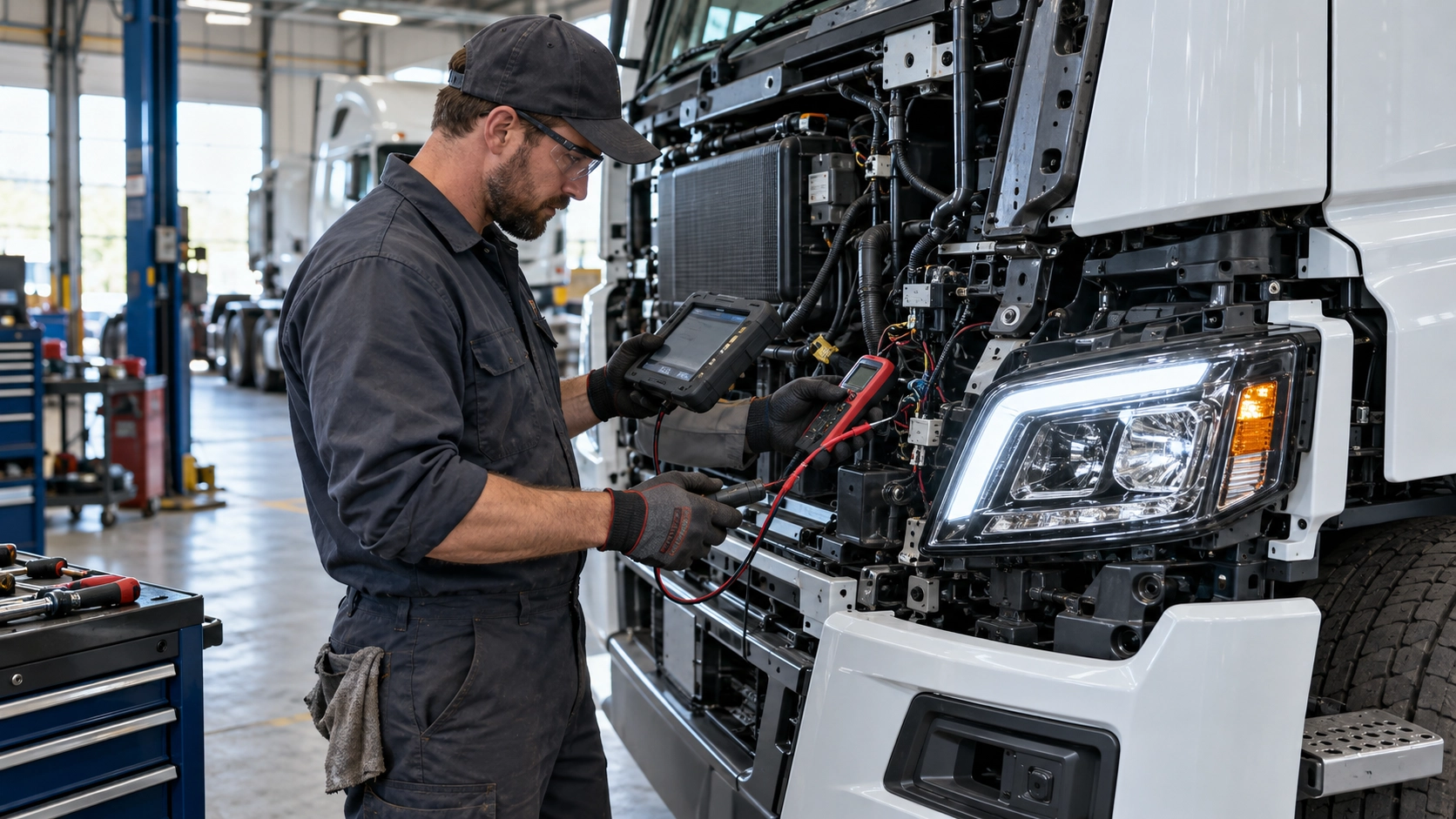
CAN Bus Compatibility Testing for Commercial Vehicle LED Headlights
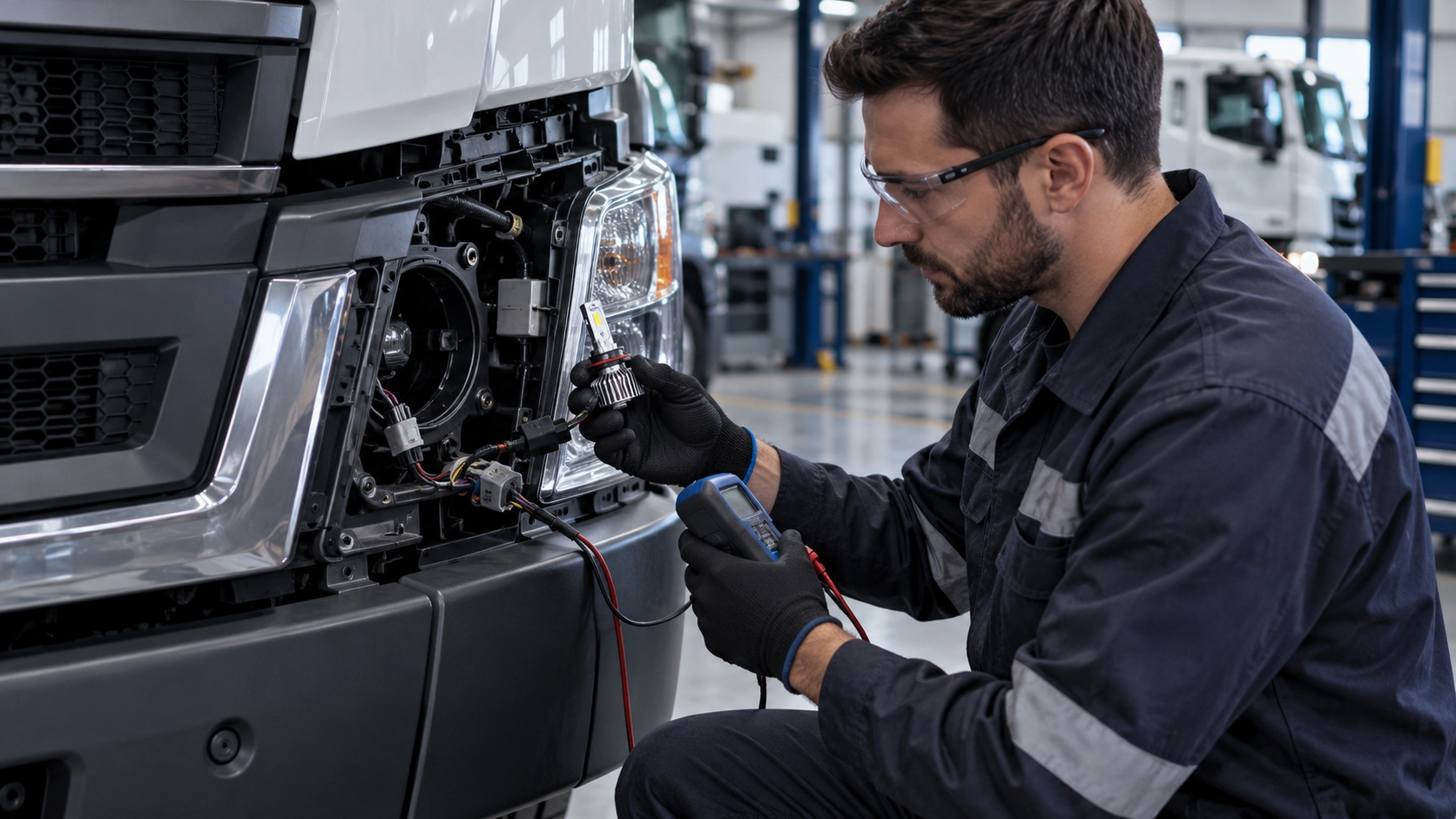
24V LED Headlights for Commercial Vehicles: Compatibility and Fleet Validation
You May Also Like
Get More Resources
If you have any comments or good suggestions, please leave us a message, later our professional staff will contact you as soon as possible.
Start Your Wholesale Order / Request OEM Solutions
Partner directly with the factory for competitive pricing and priority support. Please provide your business details and estimated order volume (MOQ applies) so our sales engineers can tailor the best quote for your market.
Contact us


6th Floor, Building B, Liando U Valley, No. 29, Bishan Street, Huangpu District, Guangzhou, China

© 2026 CARNEON. All Rights Reserved. Privacy Policy | Terms and Conditions | Sitemap

Whatsapp: +8618688487142