


Why Are LED Off Road Spot Lights Better for Night Driving?
Quick Answer
LED off road spot lights can improve night driving by producing a focused beam, efficient illumination, instant activation, and stable performance under vibration. CARNEON supports project evaluation around beam pattern, optical output, thermal management, electrical compatibility, and housing requirements. Final selection depends on the vehicle, operating environment, legal requirements, and site testing.
How CARNEON Supports Projects
CARNEON is supported by Guangzhou Evitek Electronic Co., Ltd., which has more than 16 years of automotive LED lighting manufacturing experience, an 8,000㎡ ISO-certified facility in Dongguan, and a 300-plus-person organization. Its capabilities include performance tuning, OEM/ODM coordination, customized branding and packaging, in-house testing, and production planning for automotive lighting programs.
Buyers should confirm beam pattern, optical target, input voltage, thermal design, housing dimensions, connector configuration, and market compliance needs. MOQ, lead time, testing scope, and quotation must be confirmed for each project; sample turnaround is typically 3–5 days and mass production planning is typically 15–25 days, subject to specification.
Discuss Your Night-Driving Lighting Project
Share your target market, vehicle models, intended terrain, operating voltage, mounting dimensions, required beam pattern, expected order volume, and compliance requirements so suitable options and sample steps can be evaluated. Discuss project requirements at www.carneonlighting.com or nick@evitekhid.com.
Deep-Dive FAQs
Why does a focused beam improve visibility on unlit trails?
A focused beam places more light into a defined forward area than a broad flood pattern, helping the driver identify terrain, bends, obstacles, and changes in elevation at useful distances. Beam focus does not mean higher total light output; it describes how the optic distributes available light. Buyers should review measured beam diagrams or photometric data instead of relying only on advertised lumen values. Combining a spot pattern with appropriately positioned flood lighting may provide better terrain coverage, but aiming remains critical because an incorrectly aligned lamp can create distracting reflections from dust, rain, or nearby surfaces.
How should beginners compare lumens, lux, and beam distance?
Lumens describe the total visible light emitted by a source, while lux describes illuminance received on a surface at a specified distance and location. Beam distance is meaningful only when the measurement method and threshold are stated; different manufacturers may use different criteria. For procurement, compare beam charts, candela, lux at defined distances, color temperature, current draw, and thermal conditions. A high lumen claim alone cannot establish useful forward visibility. Ask suppliers for consistent test conditions and distinguish theoretical LED output from measured lamp performance after optics, electronics, and housing losses.
Can high-output spotlights cause glare or unsafe road use?
Yes. Glare can result from excessive intensity, poor aiming, exposed emitters, reflective dust, wet surfaces, or using an off-road lamp where road regulations restrict it. A focused beam improves forward reach only when the cutoff, mounting height, and aiming angle suit the environment. Road legality varies by country and application, so buyers should verify local lighting rules before specifying auxiliary lamps for public-road driving. Use dedicated off-road lighting in appropriate areas, provide independent switching where required, and validate the installation from the driver’s viewpoint and from the perspective of approaching traffic.
What thermal issues shorten LED off-road spotlight service life?
LED junction temperature rises when heat cannot move efficiently from the emitter through the circuit board, housing, and surrounding air. High ambient temperature, blocked fins, low airflow, excessive drive current, degraded thermal interfaces, and undersized housings can reduce light output and accelerate component aging. A credible evaluation includes stabilized temperature measurements, current verification, driver protection behavior, vibration exposure, and operation at the intended ambient range. Do not judge cooling by fin size alone. The complete thermal path and installation clearance matter, particularly when lamps are mounted behind grilles, in enclosed pods, or near hot engine components.
Which mounting and wiring details prevent nighttime failures?
Use a rigid mounting surface, correctly torqued fasteners, strain relief, sealed connectors, and cable routing that avoids exhaust heat, sharp edges, suspension travel, and water traps. The circuit should be sized for measured current, protected with an appropriate fuse, and controlled through a relay or switching arrangement suitable for the vehicle. Voltage drop can reduce performance, while poor grounding can cause intermittent operation. Confirm connector polarity, operating-voltage range, reverse-polarity protection, and switch capacity before installation. After fitting, inspect beam aim, fastener retention, harness movement, and connector sealing during a practical road or trail test.
How do weather ratings affect real-world off-road reliability?
Ingress ratings are defined under IEC 60529 test conditions, but an IP rating does not describe every field exposure. Pressure washing, repeated thermal cycling, mud abrasion, connector damage, condensation, ultraviolet exposure, and incorrect cable entry can create risks beyond the original enclosure test. Buyers should confirm the complete assembly rating, including connectors and vents, rather than reviewing the lamp housing alone. Ask how samples are tested for water ingress, vibration, corrosion, and temperature cycling, and match the result to the vehicle’s mounting location. Periodic inspection remains necessary because seals and harnesses can deteriorate in service.
Recommended for you
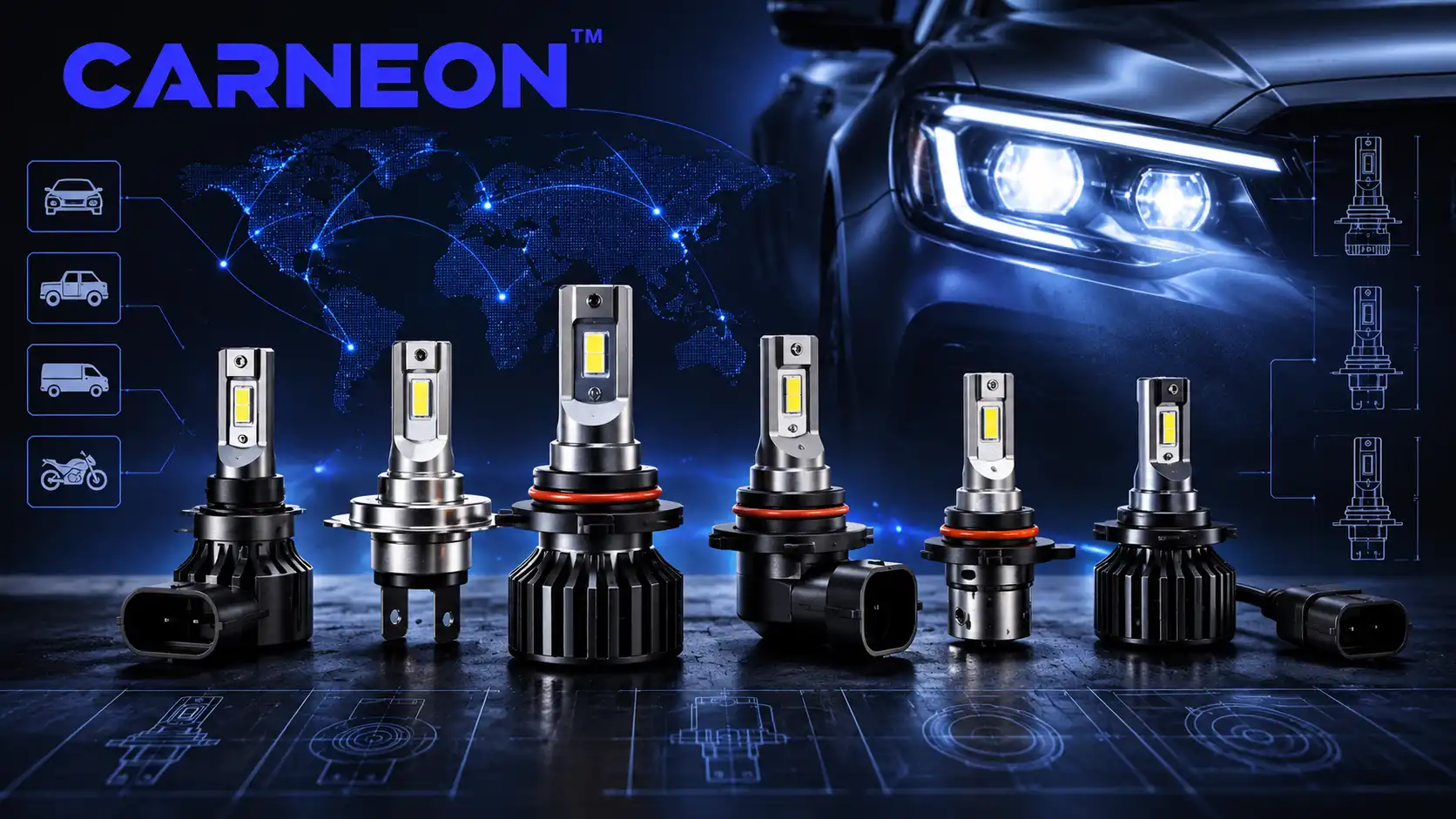
LED Headlight Bulb Sizes & Applications: A B2B Market Sourcing and Fitment Guide
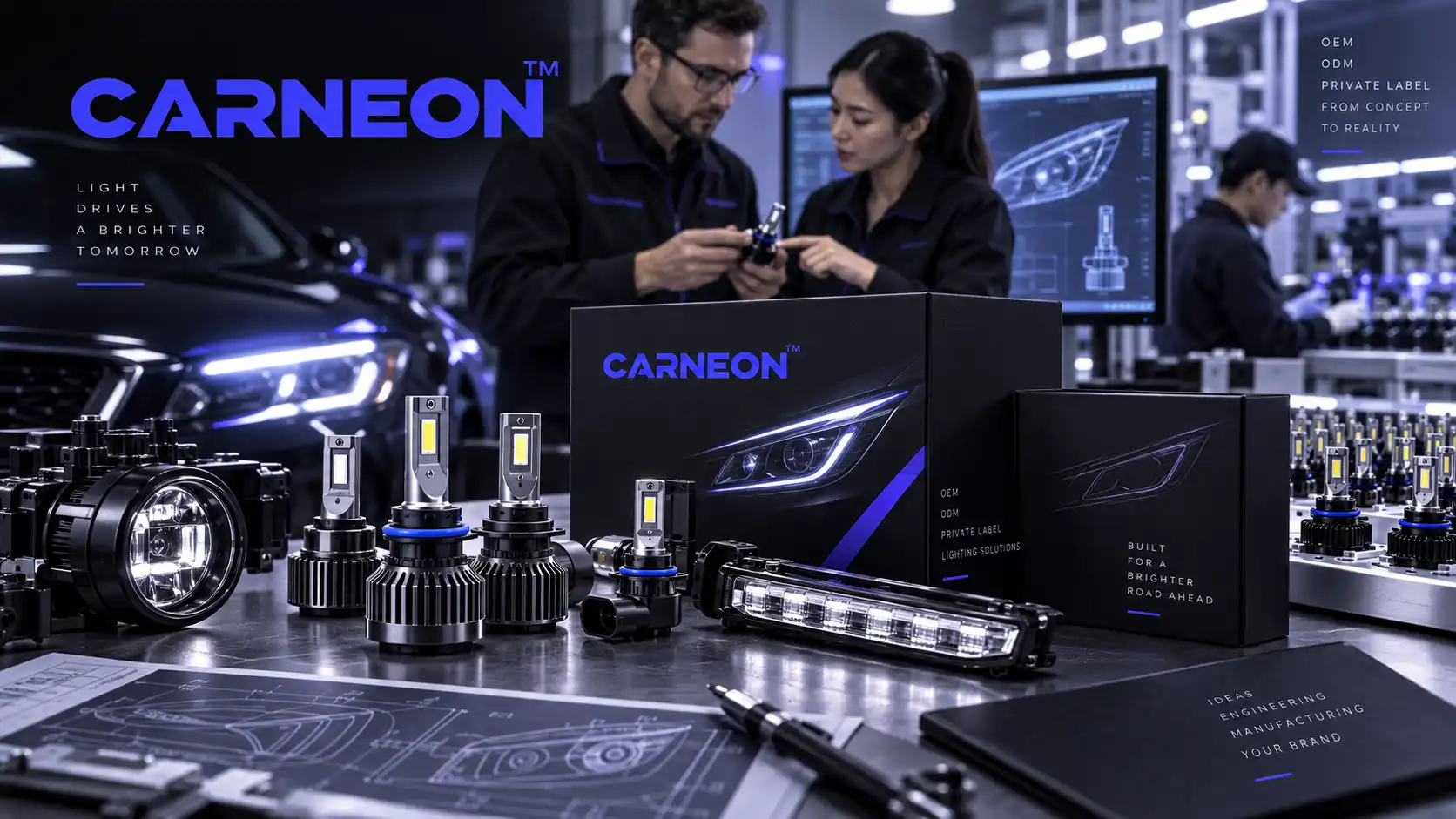
How to Launch a Private Label Automotive LED Lighting Brand: An OEM/ODM Roadmap for Distributors
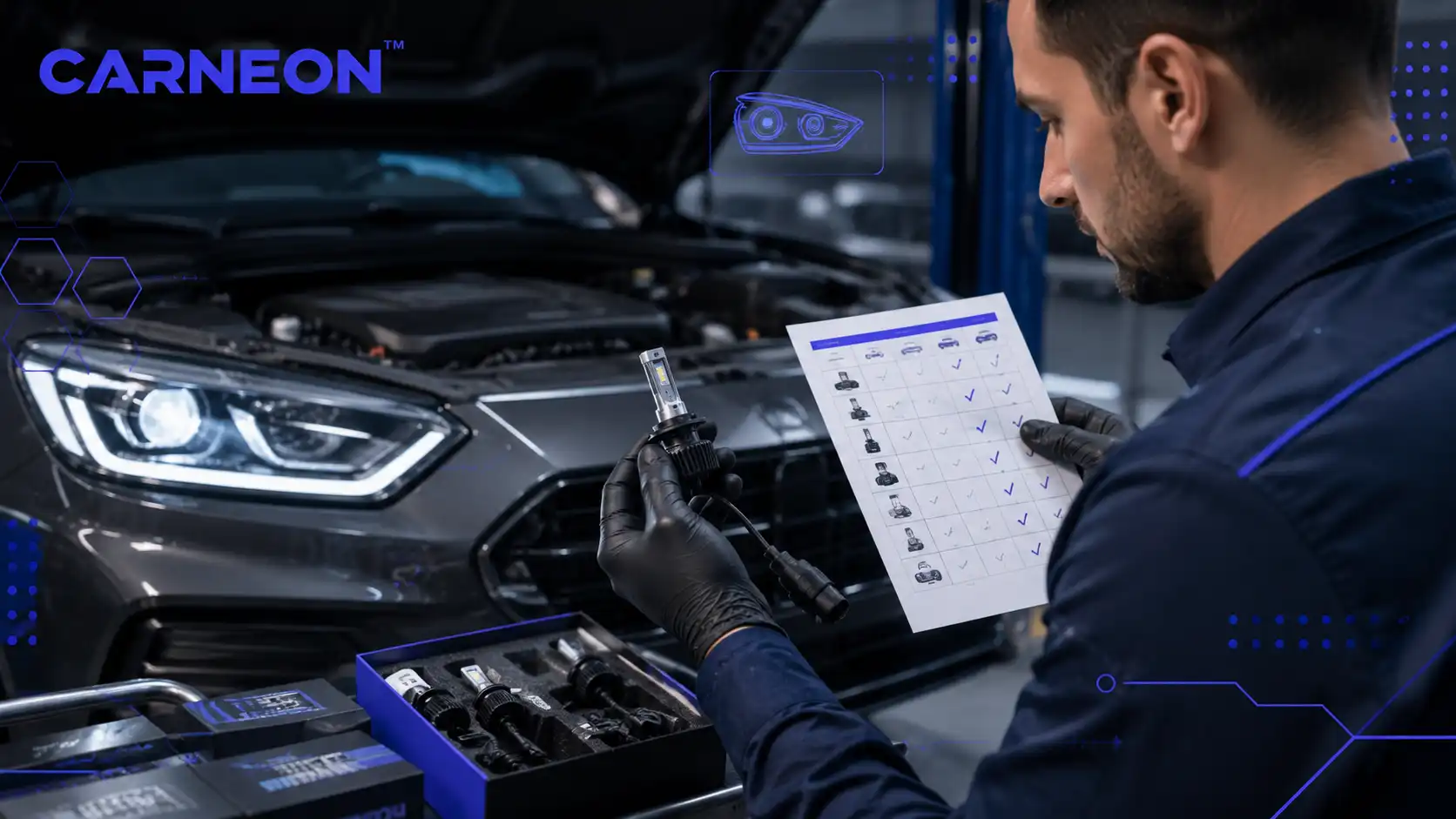
LED Headlight Troubleshooting for Auto Parts Distributors: Installation & Compatibility Workflow

The Technical Guide to Identifying High-Performance LED Headlight Bulbs (2026 Edition)
You May Also Like



Get More Resources
If you have any comments or good suggestions, please leave us a message, later our professional staff will contact you as soon as possible.
Start Your Wholesale Order / Request OEM Solutions
Partner directly with the factory for competitive pricing and priority support. Please provide your business details and estimated order volume (MOQ applies) so our sales engineers can tailor the best quote for your market.
Contact us


6th Floor, Building B, Liando U Valley, No. 29, Bishan Street, Huangpu District, Guangzhou, China

© 2026 CARNEON. All Rights Reserved. Privacy Policy | Terms and Conditions | Sitemap

Whatsapp: +8618688487142