


What warranty and certifications do LED headlight bulbs have? | Insights by CARNEON
- If one LED bulb fails after 14 months, will a 2-year manufacturer warranty cover shipping, labor, and any vehicle damage caused by the failure?
- How can I verify a seller’s claim that their retrofit LED bulbs are DOT or ECE certified when their product photos only show low-resolution markings?
- Do IP67 or IP68 ratings guarantee zero condensation or permanent water ingress after heavy off-road use and pressure-washing?
- Will installing aftermarket LED bulbs into my vehicle’s original reflector or projector housing void the vehicle’s headlight warranty or violate safety regulations?
- What electrical and EMC/EMI certifications should I require to ensure aftermarket LED bulbs won’t interfere with ADAS sensors, radios or vehicle electronics?
- Will a DOT or ECE mark guarantee the retrofit bulb’s beam pattern won’t blind oncoming drivers, or do I need additional photometric test data?
Buying aftermarket LED headlight bulbs raises specific safety, legal and reliability questions. Below are six detailed, beginner-focused long-tail questions that frequently lack robust answers online, each followed by in-depth, actionable guidance. This article explains warranty coverage, DOT/ECE and CE/RoHS markings, IP67/IP68 waterproof ratings, EMC/EMI testing, photometric compliance and how to validate third-party test reports before purchase.
If one LED bulb fails after 14 months, will a 2-year manufacturer warranty cover shipping, labor, and any vehicle damage caused by the failure?
Short answer: not automatically — read the fine print. Typical LED headlight bulb warranties (2–5 years for reputable brands; some offer limited lifetime warranties on the LED chips) usually cover manufacturing defects and premature failure of the bulb and driver. They commonly exclude consequential damages (vehicle wiring, melted sockets, short circuits, paint or lens damage) and costs for professional installation. What to check and do:
- Warranty scope: obtain the exact warranty statement. Look for phrases such as “limited warranty covers defects in materials and workmanship” and explicit inclusions/exclusions (shipping, labor, consequential damage).
- Proof of purchase & serial number: keep your invoice, original packaging, and serial numbers — most manufacturers require them to process claims.
- Installation conditions: many warranties are void if the product is improperly installed, used outside the stated voltage range (9–16V typical), or modified (cutting wires, using non-approved adapters). Professional installation may be required for coverage.
- Claim process: document failure with photos/videos, describe symptoms (flicker, color shift, smoke), and preserve the failed unit. Contact the seller/distributor first; they typically issue an RMA and may require return shipping. Some brands cover return shipping for verified defects; many do not.
- Consequential damage: if the bulb caused damage to vehicle wiring or electronics, most manufacturers disclaim liability. In jurisdictions with strong consumer protections (EU), you may have additional recourse via the seller or local consumer law.
Practical tip: choose brands providing clear, written warranty terms and a local distributor to avoid expensive overseas returns. For fleet or professional use, negotiate a commercial warranty that explicitly covers labor and shipping if needed.
How can I verify a seller’s claim that their retrofit LED bulbs are DOT or ECE certified when their product photos only show low-resolution markings?
Low-res photos of markings are not sufficient. Follow this verification process to validate DOT/ECE approvals and photometric compliance:
- Ask for full certification documents: request the actual certificate or test report (PDF) and the issuing body (e.g., DOT/FMCSA, national type-approval agency, TÜV, Intertek, DEKRA). A legitimate report will include product model, sample ID, testing lab, test dates, and an approval number.
- Check the issuing lab: verify report authenticity by contacting the test laboratory or searching its database. Reputable third-party labs include TÜV Rheinland, UL/ETL, Intertek, and DEKRA. If the report cites a private internal lab, treat it with caution.
- Understand regional rules: in the U.S., FMVSS 108 governs lamps; manufacturers often mark complete headlamp assemblies rather than retrofit bulbs. Many LED conversion kits are not DOT-compliant for street use even if they bear markings. In Europe, E-mark (E‑type) approvals apply, and specific ECE R-series depend on product type; ask which R-regulation the report cites.
- Photometric data: request the photometric report (IES or LM-79/LM-80 style data) showing measured candela distribution and cutoff. For retrofits, a DOT/ECE mark alone may not guarantee correct beam pattern — photometric results are the proof.
If a seller cannot provide verifiable test reports from recognized third parties, treat the listing as high risk for non-compliance or illegal retrofit use.
Do IP67 or IP68 ratings guarantee zero condensation or permanent water ingress after heavy off-road use and pressure-washing?
IP ratings (Ingress Protection) describe laboratory-tested resistance to solids and liquids. IP67 means dust-tight and temporary immersion (1m for 30 minutes); IP68 indicates protection against continuous immersion under conditions specified by the manufacturer. However, lab ratings do not guarantee real-world immunity in all scenarios. Key points:
- Lab vs field: IP tests are controlled and performed on new samples. Off-road vibration, thermal cycling, UV exposure, mechanical impacts, and improper seals during installation can create micro-gaps over time that allow moisture ingress.
- Sealing system: check for silicone gaskets, potting of the driver, and seam-welded housings rather than simple snap-fit cases. Manufacturer datasheets should describe the sealing method.
- Connector quality: waterproof connectors and correct routing of wires reduce water wicking into housings. Many failures occur at the plug rather than the bulb body.
- Condensation vs ingress: small temporary condensation is common with temperature swings and does not always indicate seal failure. Persistent pooling, fogged optics, or corrosion indicates a breach and should be reported under warranty if claimed.
Recommendation: for off-road or pressure-wash use, choose units with IP68, robust mechanical seals, and documented field-testing or long-term temperature/vibration test reports. Ask the vendor for accelerated life testing data (temperature cycling and vibration) if real-world durability is critical.
Will installing aftermarket LED bulbs into my vehicle’s original reflector or projector housing void the vehicle’s headlight warranty or violate safety regulations?
Yes — both outcomes are possible, depending on region, vehicle maker and the type of change. Details:
- Vehicle manufacturer warranty: many OEM warranties restrict modifications that cause damage. If an aftermarket LED retrofit causes electrical or thermal damage, the automaker may deny related repairs under warranty. Check your vehicle warranty booklet for modification clauses.
- Compliance and legality: in many jurisdictions (e.g., some U.S. states and countries), replacing lamp types (halogen to retrofit LED) without an approved assembly can be illegal for road use because the beam pattern and glare may not meet FMVSS 108 or ECE photometric standards. Some DOT/ECE approvals only apply to complete headlamp assemblies or LED modules intentionally designed for the housing.
- Optical mismatch: Reflector housings designed for filament bulbs can produce scatter and excessive glare with LED conversion kits, creating safety and legal issues. Projector housings handle retrofits better but still must produce correct beam cutoff.
- Mitigation: use complete retrofit kits that include both the LED lamp and an engineered optical adapter or buy a certified complete LED headlamp assembly from OEM or aftermarket suppliers with proper approvals.
Before buying, confirm local vehicle lighting regulations and consult your dealer if warranty concerns are important. For commercial/fleet vehicles, obtain a written acceptance or modification waiver from the fleet's warranty provider.
What electrical and EMC/EMI certifications should I require to ensure aftermarket LED bulbs won’t interfere with ADAS sensors, radios or vehicle electronics?
Modern vehicles have sensitive electronics — ADAS, TPMS, infotainment and radio systems can be affected by electromagnetic interference (EMI) or incorrect electrical loads. Required checks:
- EMC/EMI testing: request compliance with relevant electromagnetic compatibility tests. For the U.S., FCC Part 15 (for unintentional radiators) is relevant for many electronic devices. For automotive components, look for automotive EMC test reports to industry standards (immunity and emissions per CISPR 25 and ISO 11452 series) performed by a recognized lab.
- Voltage/Current spec: confirm the driver accepts the vehicle’s voltage range (typically 9–16V for 12V systems, 18–32V for 24V) and has transient protection (TVS diodes) against load dumps and spikes.
- CANbus compatibility: if the vehicle uses a CANbus warning system, choose bulbs designed to be CANbus-compatible or use properly rated resistors/decoders; however, resistors can increase heat and may mask faults rather than fix root causes.
- EMI mitigation features: look for shielded drivers, ferrite beads, and certification statements that the product was tested with in-vehicle harnesses and anechoic chamber radiated tests.
- Third-party lab reports: request EMC test reports from labs such as TÜV, Intertek, DEKRA, or a national automotive test house. The report should list test standards (CISPR 25, ISO 11452) and measured limits.
Practical advice: for vehicles with ADAS, prioritize OEM or certified aftermarket assemblies. If only bulbs are changed, buy products that explicitly show automotive EMC testing and have local technical support for troubleshooting interference issues.
Will a DOT or ECE mark guarantee the retrofit bulb’s beam pattern won’t blind oncoming drivers, or do I need additional photometric test data?
A DOT or ECE mark is helpful but not a guaranteed safeguard for retrofit bulbs. The real proof is detailed photometric test data. Here’s what to request and why it matters:
- Photometric report: ask for the measured luminous intensity distribution (candela vs. angle) and cutoff diagrams produced in an accredited photometric lab. Look for IES files or photometric plots and compare them to the vehicle’s intended beam pattern (left- or right-hand drive markets differ).
- Test standard: photometric testing should reference the applicable standard (FMVSS 108/DOT or the relevant ECE regulation) and show pass/fail criteria. For retrofit bulbs, many DOT marks are not valid because the original reflector/projector was designed for a different light source.
- Real-world validation: a bench test is necessary but not always sufficient. Verify that the bulb in your specific reflector or projector housing produces a proper cutoff on a headlight alignment wall — some vendors offer in-car photometry or alignment services.
- Beam artifacts: improper LED chip placement or poor beam centering can cause hotspots or scatter that dazzle. Request pictures of the beam on a test wall from the same housing type as your vehicle.
Conclusion: insist on photometric data in addition to regulatory marks. For safety-critical assurance, choose certified complete headlamp assemblies or LED modules designed and approved for your exact housing type.
Final checklist before purchase — ask the seller for: official warranty PDF, serial number and RMA policy; third-party test reports for photometry and EMC (TÜV/Intertek/DEKRA/UL); IP rating and sealing details; field durability/temperature cycling test data; and documented CANbus/vehicle compatibility list.
Choosing LED headlight bulbs with verified DOT/ECE/CE markings, IP68 sealing, EMC/CISPR 25 tests, and clear multi-year limited warranties reduces risk. For fleet, commercial or ADAS-equipped vehicles, prefer certified complete headlamp assemblies or products with extensive third-party test documentation.
Contact us for a personalized quote and to confirm certification documents and warranty terms: www.carneonlighting.com or email nick@evitekhid.com.
Recommended for you
Why Your Customers Complain About LED Headlight Flickering (And How Our CANbus Solutions Fix It)
The Ultimate B2B Guide to Plug and Play LED Headlights: 1:1 Design, Specs & CANbus Solutions
LED vs. HID vs. Laser: Which Headlight Technology is Actually the Brightest for 2026?
Evitek Launches Smart Control Headlight—N14 Series, Redefining Driving Lighting Experience
FAQs
Brand
What makes CARNEON headlights reliable?
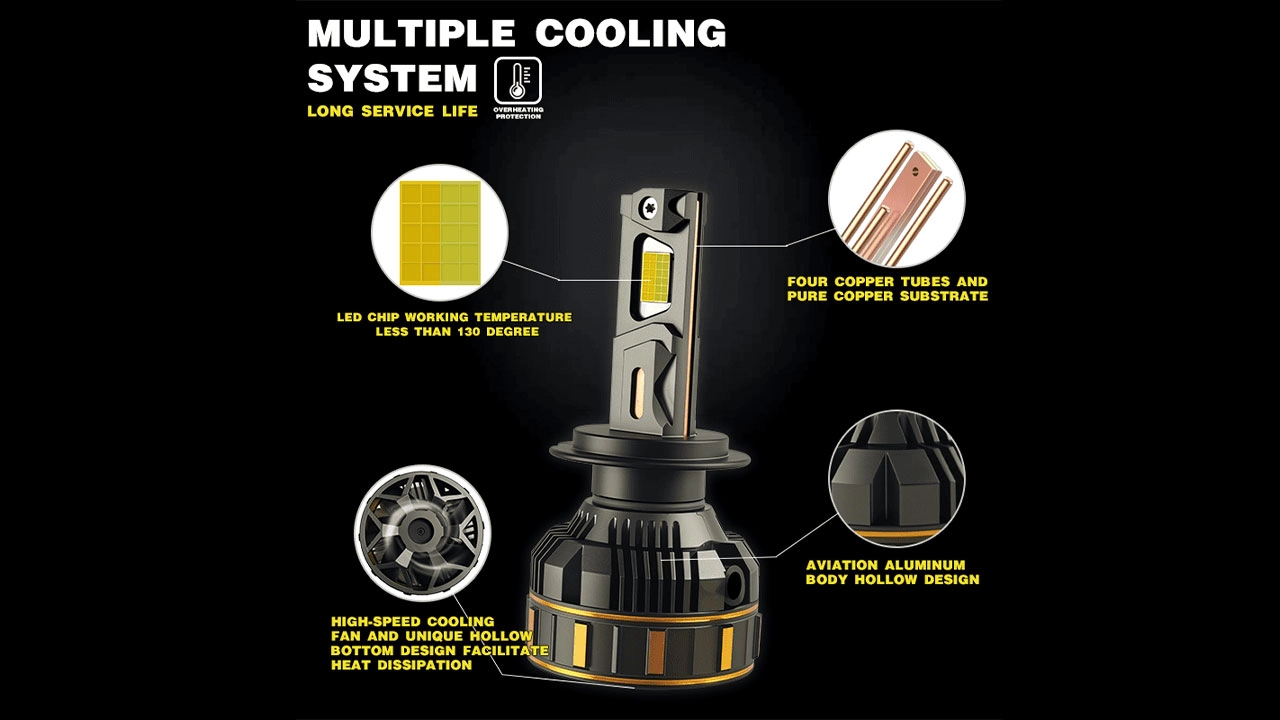
Triple-copper heat conduction system, rigorous testing, stable power output, and real-world vehicle testing ensure reliability.
E1
What is the MOQ?
Usually 50 sets, depending on the model.
Company
How many employees in Evitek?
Product
Can I get some samples to test first?
You May Also Like
Get More Resources
If you have any comments or good suggestions, please leave us a message, later our professional staff will contact you as soon as possible.
Start Your Wholesale Order / Request OEM Solutions
Partner directly with the factory for competitive pricing and priority support. Please provide your business details and estimated order volume (MOQ applies) so our sales engineers can tailor the best quote for your market.
Contact us


6th Floor, Building B, Liando U Valley, No. 29, Bishan Street, Huangpu District, Guangzhou, China

© 2026 CARNEON. All Rights Reserved. Privacy Policy | Terms and Conditions | Sitemap

Whatsapp: +8618688487142