


how do plug and play led headlights improve night driving? | Insights by CARNEON
How Plug-and-Play LED Headlights Can Improve Night Driving
Quick Answer
How do plug and play LED headlights improve night driving? They improve useful illumination only when the beam matches the vehicle’s optics and the lamps are correctly aimed; a connector match alone does not establish compatibility. Evaluate beam pattern, fitment, heat clearance, electrical behavior, and local road rules. Suitability depends on vehicle-specific testing and conditions.
How Carneon Lighting Supports Plug-and-Play LED Headlight Projects
The supplied company information for Carneon Lighting does not document specific headlight-development, OEM/ODM, manufacturing, or testing capabilities, so these should be confirmed rather than assumed. For a supplier discussion, identify the exact vehicle and headlamp assembly, then request information relevant to that application.
Before proceeding, confirm bulb type, connector and polarity, available space behind the lamp, beam-performance evidence, and intended market. MOQ, lead time, testing scope, and quotation must be confirmed per project; no standard terms or capabilities have been provided here.
Discuss Your LED Headlight Fitment Requirements
For a project-specific discussion, provide the vehicle make, model and year, headlamp type, original bulb number, target market, order quantity, and any fitment or performance requirements. These details can help frame questions about suitable options, sample steps, and quotation, subject to supplier confirmation. Visit www.carneonlighting.com or email nick@evitekhid.com.
Plug-and-Play LED Headlight FAQs
How can plug-and-play LEDs improve visibility without causing glare?
The potential benefit comes from where the light lands, not simply how bright or white the bulb appears. A headlamp’s reflector or projector is designed around a particular light source position and shape. If an LED emitter does not align with that optical design, the result can include misplaced bright zones, a weak foreground, or light above the intended cutoff. Correct installation and aim matter, but they cannot compensate for an incompatible optical pattern. Check the low-beam cutoff and light distribution against the vehicle’s specifications, and avoid judging performance by looking at the lamp or by choosing the highest advertised lumen figure.
Will LED bulbs create a better beam in my reflector headlights?
Not necessarily. A reflector headlamp directs light using geometry designed for its specified bulb and filament location. An LED replacement can produce a useful pattern in some combinations, but a bulb that physically fits may place its emitters differently from the original filament, changing the beam’s focus and intensity distribution. Look for application-specific beam evidence or a properly conducted photometric assessment rather than assuming all reflectors behave alike. After installation, check the beam against the vehicle manual’s aiming procedure and have the pattern assessed safely; do not use apparent brightness on a wall as proof that the beam is road-appropriate.
Do plug-and-play LED headlights fit every vehicle’s factory socket?
No. “Plug-and-play” usually describes a claimed electrical connector match, not universal physical, optical, or vehicle-system compatibility. The bulb base, retaining clip, dust cover, wiring space, heat-sink or fan clearance, polarity, and any control electronics can vary by vehicle and headlamp. Some cars may also report a lamp fault or behave differently because of their monitoring circuitry. Confirm the bulb number from the vehicle documentation or existing bulb, then compare the lamp assembly and available rear clearance. Check compatibility for the exact make, model, year, and headlamp configuration rather than relying on a broad vehicle-fit list alone.
Why do some LED headlight kits flicker or show errors?
Flicker or dashboard warnings can result from electrical incompatibility, such as a vehicle’s lamp monitoring system interpreting the LED’s electrical load differently from the original bulb. Other possible causes include a loose connector, poor contact, incorrect polarity on some designs, or an unsuitable driver. The cause is vehicle- and product-specific, so a warning should not automatically be treated as harmless. Check the installation and the vehicle’s documentation, and ask the supplier about compatibility with the specific vehicle electronics. Avoid improvised wiring changes or bypass devices unless they are appropriate, safely installed, and lawful for the application.
Does a whiter LED headlight color improve nighttime distance vision?
A whiter-looking color does not, by itself, show that a headlamp illuminates farther or improves recognition distance. Visibility depends on beam distribution, intensity in the relevant parts of the beam, road and weather conditions, and how the driver perceives contrast. Color temperature is a descriptive property of the light’s appearance, not a substitute for headlamp photometry. In rain, fog, or on reflective signs, perceived comfort and glare can also differ among drivers and conditions. Compare the complete beam pattern and application-specific performance rather than selecting a replacement by color description alone.
What should beginners check after installing LED headlight bulbs?
Confirm that each bulb is seated and retained correctly, the connector is secure, and the dust cover or seal can be refitted without interfering with the lamp or cooling components. Test low and high beams, check for flicker or warning messages, and inspect the beam pattern on a level surface using the vehicle maker’s aiming procedure. A wall check can reveal obvious misalignment but does not establish compliant photometric performance. If the cutoff is uneven, the beam is scattered, or other drivers experience glare, stop using the setup on public roads until compatibility and aim are assessed. Also verify local requirements for replacement light sources.
Recommended for you
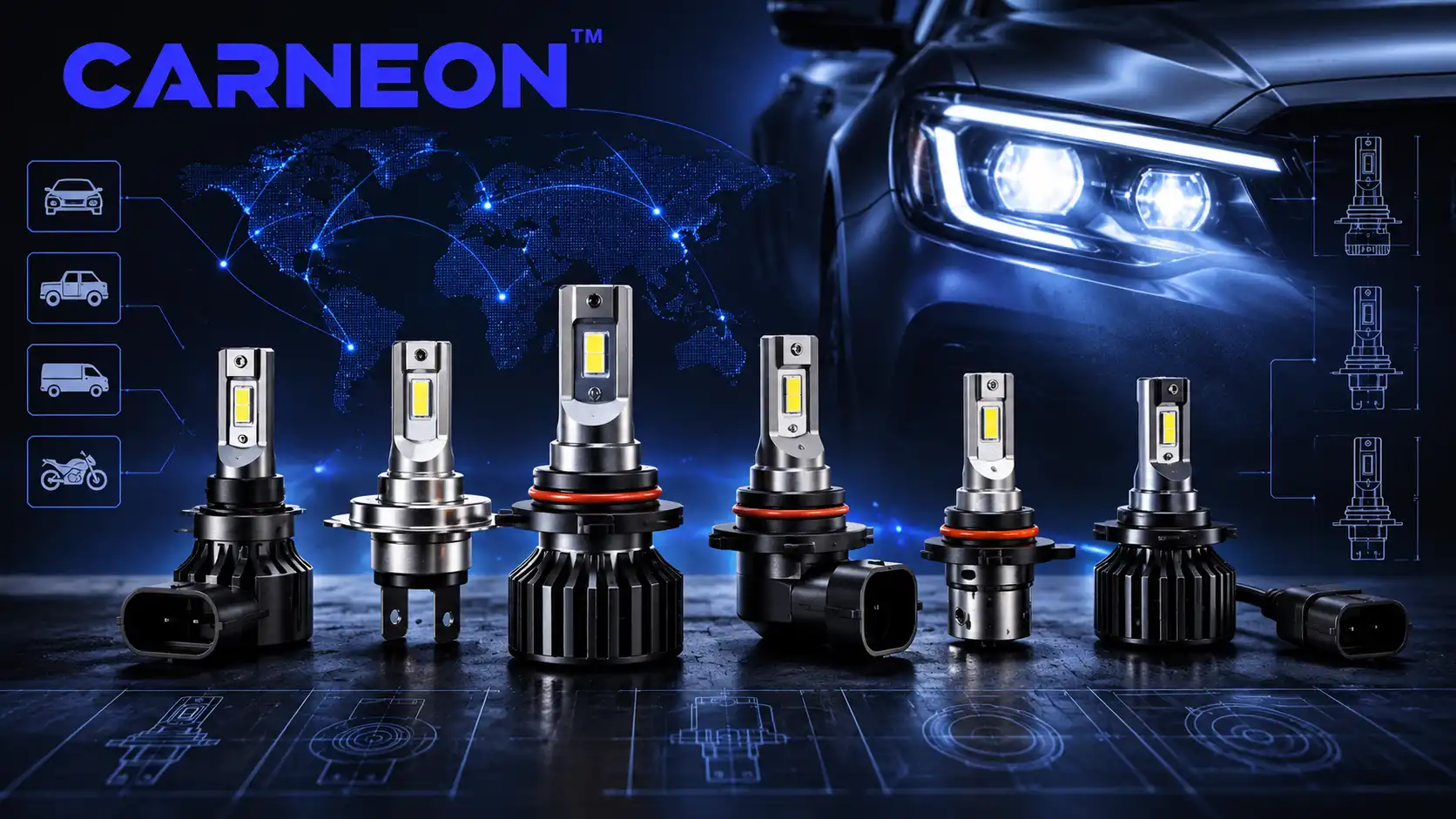
LED Headlight Bulb Sizes & Applications: A B2B Market Sourcing and Fitment Guide
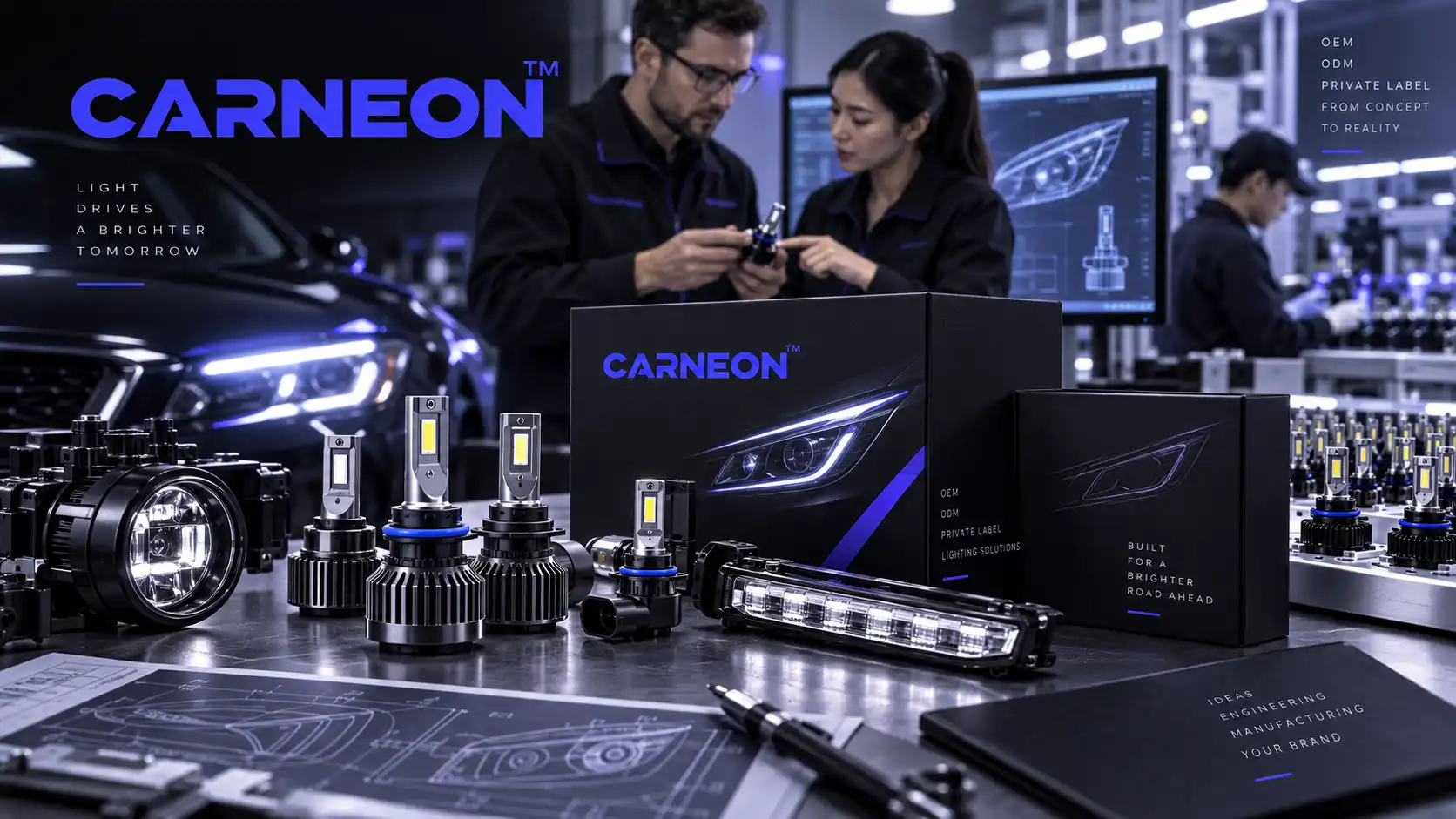
How to Launch a Private Label Automotive LED Lighting Brand: An OEM/ODM Roadmap for Distributors
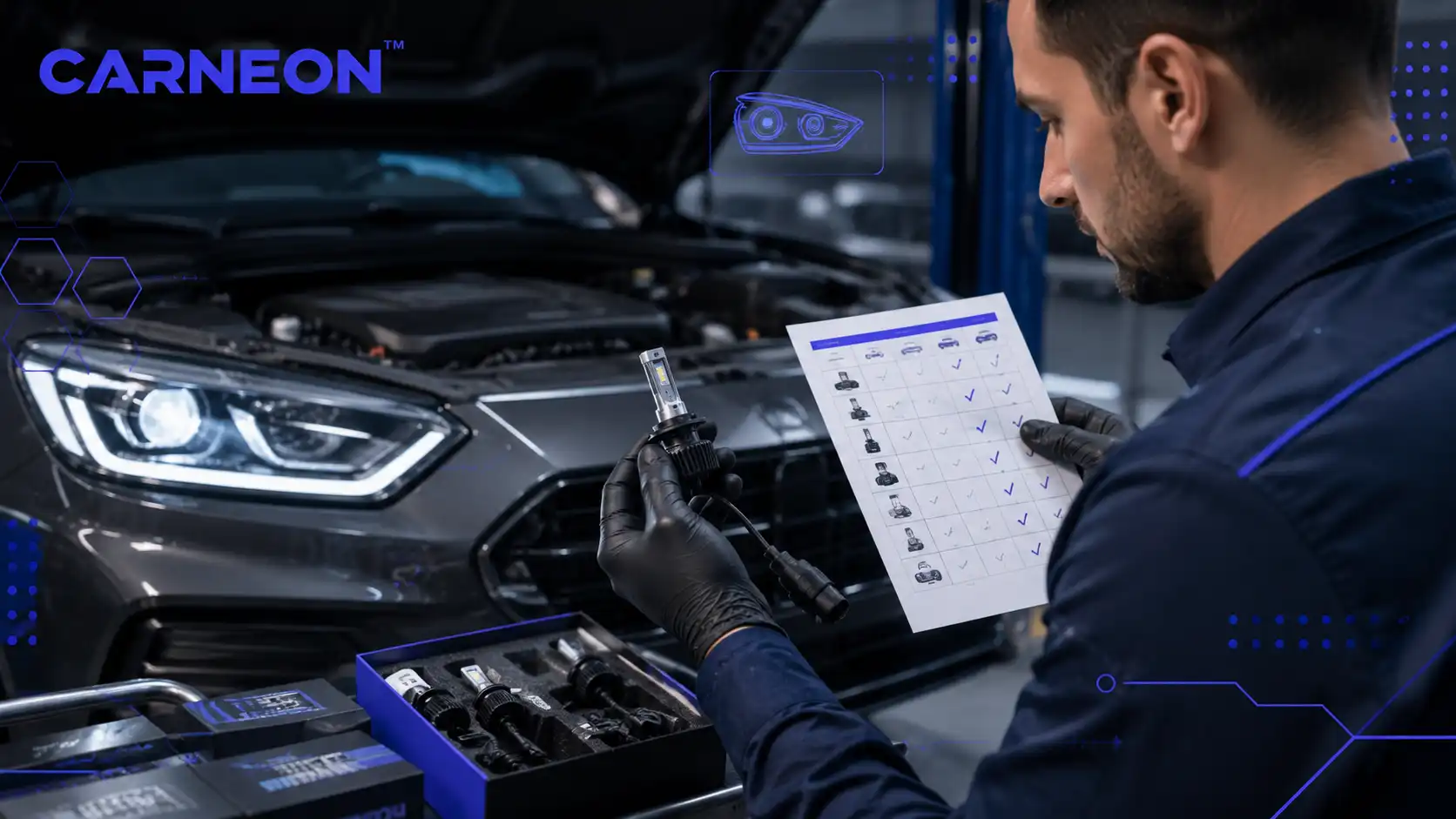
LED Headlight Troubleshooting for Auto Parts Distributors: Installation & Compatibility Workflow

The Technical Guide to Identifying High-Performance LED Headlight Bulbs (2026 Edition)
You May Also Like



Get More Resources
If you have any comments or good suggestions, please leave us a message, later our professional staff will contact you as soon as possible.
Start Your Wholesale Order / Request OEM Solutions
Partner directly with the factory for competitive pricing and priority support. Please provide your business details and estimated order volume (MOQ applies) so our sales engineers can tailor the best quote for your market.
Contact us


6th Floor, Building B, Liando U Valley, No. 29, Bishan Street, Huangpu District, Guangzhou, China

© 2026 CARNEON. All Rights Reserved. Privacy Policy | Terms and Conditions | Sitemap

Whatsapp: +8618688487142