


Best LED Headlight Bulbs (2026): Reviews, Fitment & Installation Guide
Upgrading to LED headlight bulbs is one of the most effective ways to modernize your vehicle and improve night-time safety. By choosing the right size (like H11 or 9005), sticking to a verified 6000K white light, and ensuring a precise beam pattern, you can enjoy superior visibility without blinding other drivers. Whether you need a fanless design for longevity or a high-output fan model for maximum brightness, the 2026 lineup offers a plug-and-play solution for every driver. Ready to see the difference? Check your vehicle's bulb size and start your upgrade today.
- Why Upgrade to LED? Brighter Roads and Safer Driving
- The Hidden Dangers of Dim Halogen Bulbs
- Halogen vs. LED: A Technical Comparison
- Instant-On Technology and Reaction Time
- Top Rated LED Headlight Bulbs for 2026
- Overall Best Pick: Precision and Power
- Best Value: Safety on a Budget
- Best Fanless Design: Silent Durability
- Premium Choice: High-Output & CANbus Ready
- Fitment Guide: Finding the Right Bulb Size (H11, 9005, H4)
- Identifying Your Bulb Size
- Common Sizes Explained
- Understanding "Street Legal" vs. Off-Road Use
- Installation & Tech Specs: Fan vs. Fanless & Color Temperature
- Plug-and-Play Installation
- Fan vs. Fanless LED Bulbs
- The Ideal Color Temperature
- Beam Pattern Matters
- Common Troubleshooting: Flickering and Dash Errors
- What is CANbus?
- Flickering Lights (PWM Issues)
- Adjusting the Lock Ring
- Conclusion
- FAQ
Driving at night shouldn’t feel like a guessing game. If you are straining to see road markers or fearing that you won't spot a deer in time, your stock halogen bulbs are likely the culprit. As automotive lighting technology advances, upgrading your vehicle's lighting is no longer just about aesthetics—it is a critical safety enhancement.
Welcome to the definitive guide for the best led headlight bulbs 2026. Whether you are looking for a simple h21 led bulb upgrade for your daily commuter or a high-performance 9005 hb3 led replacement for your high beams, this guide covers the engineering, the fitment, and the installation processes required to modernize your ride.
Why Upgrade to LED? Brighter Roads and Safer Driving
The transition from halogen to LED (Light Emitting Diode) is the most significant leap in automotive lighting since the invention of Xenon HIDs. But why exactly should you make the switch?
The Hidden Dangers of Dim Halogen Bulbs
Standard halogen bulbs operate on technology that hasn't changed much in decades. They rely on a tungsten filament heating up to produce light. Over time, this filament degrades, causing the bulb to dim significantly before it actually burns out. This creates a dangerous "twilight zone" where your lights are technically functional but fail to illuminate the road effectively.
According to various IIHS headlight safety ratings, headlight performance is a crucial factor in crash avoidance. Many vehicles with standard halogen reflectors receive poor ratings due to inadequate throw distance and excessive glare. Upgrading to high-quality LEDs can rectify these deficiencies by placing more light exactly where you need it.
Halogen vs. LED: A Technical Comparison
The performance gap between the two technologies is stark:
· Lumens (Brightness): A standard halogen bulb typically produces around 1,000 to 1,500 lumens. In contrast, modern LED kits can output anywhere from 4,000 to over 12,000 lumens per set.
· Lifespan: Halogens typically last 500 to 1,000 hours. LEDs are engineered to last over 50,000 hours. Ideally, an LED upgrade is the last headlight purchase you will ever make for that vehicle.
· Energy Efficiency: LEDs draw significantly less power (watts) to produce brighter light, reducing the strain on your car’s alternator and battery.
Instant-On Technology and Reaction Time
One often-overlooked advantage of LEDs is their "instant-on" capability. Halogen bulbs take a fraction of a second to reach full brightness as the filament heats up. LEDs are instantaneous. When used in brake lights, this can give the driver behind you extra feet of stopping distance. In headlights, this instant activation allows for immediate visibility when switching between high and low beams, ensuring you never have a moment of darkness.
Top Rated LED Headlight Bulbs for 2026
Navigating the market for the best led headlight bulbs 2026 can be overwhelming due to the sheer volume of options. Based on current technological standards, beam pattern analysis, and durability testing, here are the top categories of bulbs you should consider.
Overall Best Pick: Precision and Power
The winner in this category focuses on "usable light" rather than just raw brightness. The best bulbs for 2026 utilize high-end CSP (Chip Scale Package) LED chips that are arranged to perfectly mimic the position of a halogen filament.
· Why it wins: It provides a razor-sharp cutoff line. This means the light goes down the road, not into the eyes of oncoming traffic.
· Ideal for: Drivers who do a mix of city and highway driving.
Best Value: Safety on a Budget
You don't need to spend a fortune to get a safe h21 led bulb upgrade. Value-oriented brands have optimized their manufacturing to offer durable aluminum bodies and decent brightness (usually around 6,000 lumens/set) at an entry-level price point.
· Why it wins: Balances cost with the necessary CANbus drivers to prevent flickering in most standard vehicles.
Best Fanless Design: Silent Durability
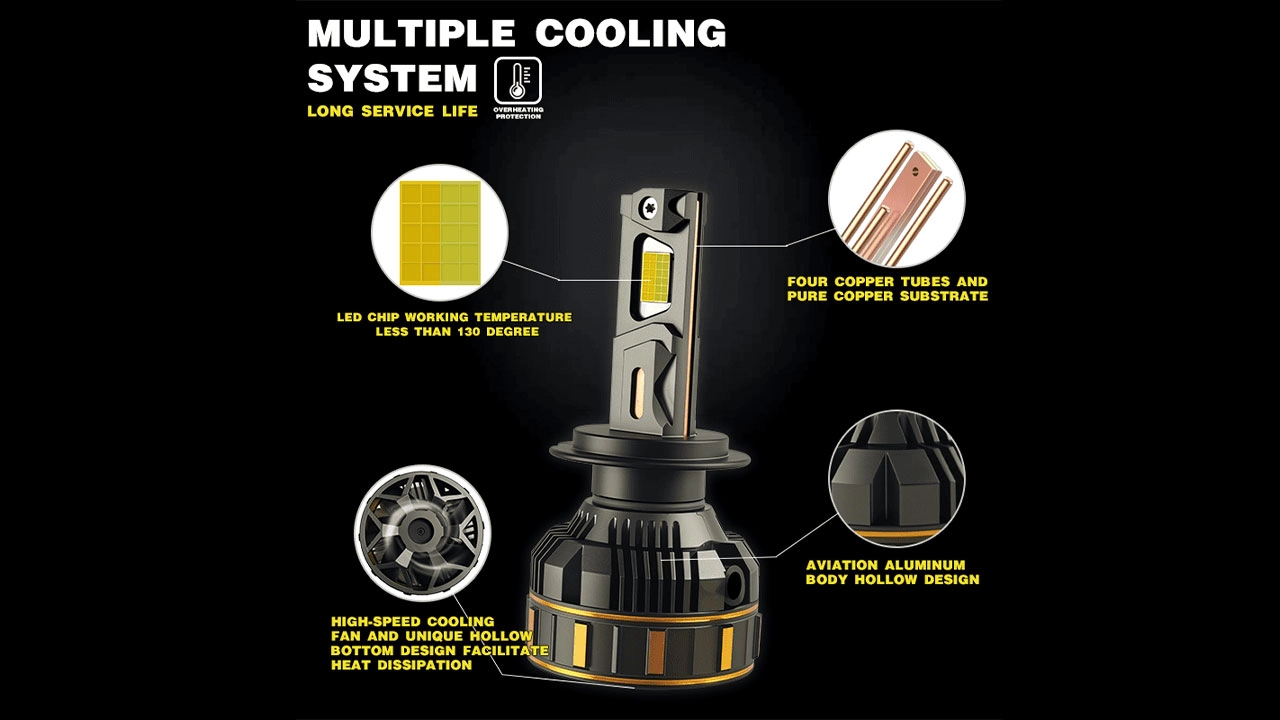
For those prioritizing longevity and silence, fanless bulbs are the gold standard. Instead of a small cooling fan (which can eventually fail or get clogged with dust), these bulbs use braided copper ribbons or massive aviation-grade aluminum heat sinks to dissipate heat.
· Why it wins: With zero moving parts, the failure rate drops significantly. They are also usually more compact, making them easier to fit in vehicles with tight headlight housings.
Premium Choice: High-Output & CANbus Ready
For luxury vehicles (BMW, Mercedes, Audi) or modern trucks (Ford F-150, Ram), the electrical systems are sensitive. Premium kits come with advanced external drivers (ballasts) that handle the complex monitoring systems of these cars.
· Why it wins: These kits prevent dashboard error codes and radio interference while delivering maximum lumen output.
Fitment Guide: Finding the Right Bulb Size (H11, 9005, H4)
Before purchasing, you must confirm the specific bulb size for your vehicle. Installing the wrong size is the most common mistake buyers make.
Identifying Your Bulb Size
1. Vehicle Manual: The most accurate source is always your owner's manual under the "Maintenance" or "Lighting" section.
2. Check the Old Bulb: Remove your current bulb; the size (e.g., H11, 9005, H7) is almost always stamped on the base or the plastic casing.
3. Online Lookups: Reputable automotive lighting retailers offer "Year, Make, Model" lookup tools.
Common Sizes Explained
· H11 (H8/H9): The most common size for Low Beams in modern vehicles. It provides the primary lighting used for normal night driving.
· 9005 (HB3): Typically used for High Beams. A 9005 hb3 led replacement is ideal for rural drivers who need maximum distance visibility when the road is clear.
· H4 (9003/HB2): A dual-filament bulb. This single bulb handles both high and low beam functions. It is common in older vehicles and some modern trucks/SUVs (like the Toyota Tacoma or Jeep Wrangler).
Understanding "Street Legal" vs. Off-Road Use
It is vital to understand the regulatory landscape. In the United States, FMVSS 108 standards dictate the requirements for automotive lighting. Many aftermarket LED bulbs are sold as "Off-Road Use Only" because they have not gone through the expensive certification process to prove they do not create glare. However, high-quality manufacturers design their bulbs to strictly adhere to the beam pattern requirements of these standards to ensure safety, even if they lack the official stamp. Always check your local laws regarding aftermarket lighting modifications.
Installation & Tech Specs: Fan vs. Fanless & Color Temperature
Once you have the right size, understanding the specs will help you choose the right model.
Plug-and-Play Installation
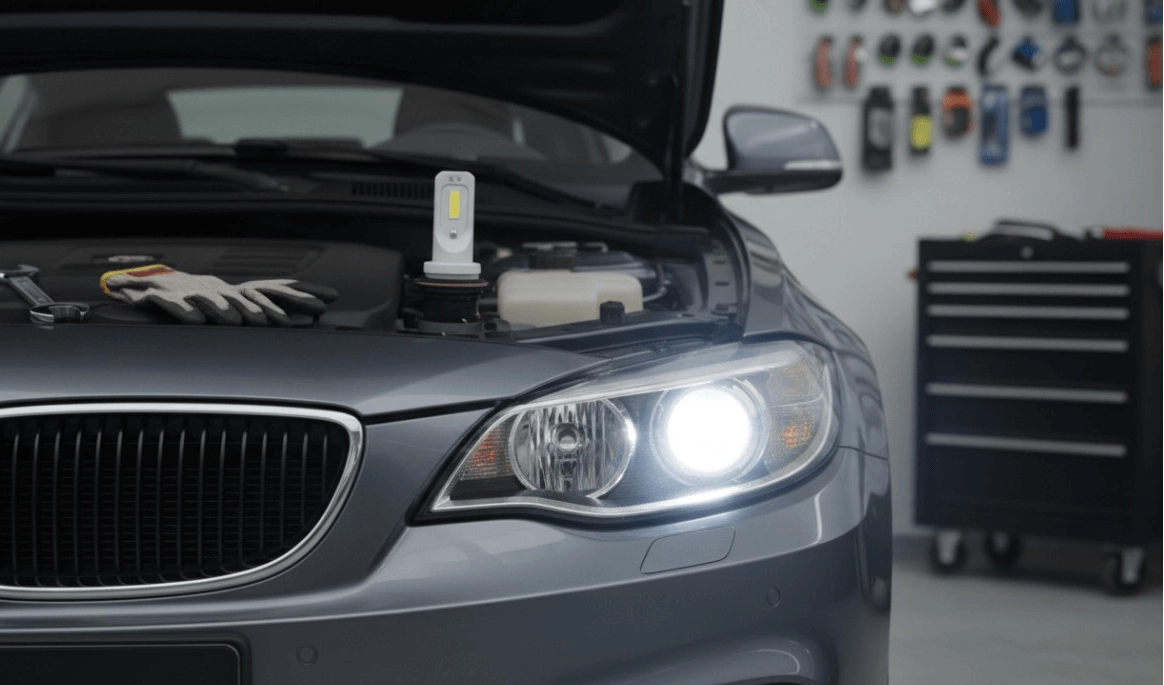
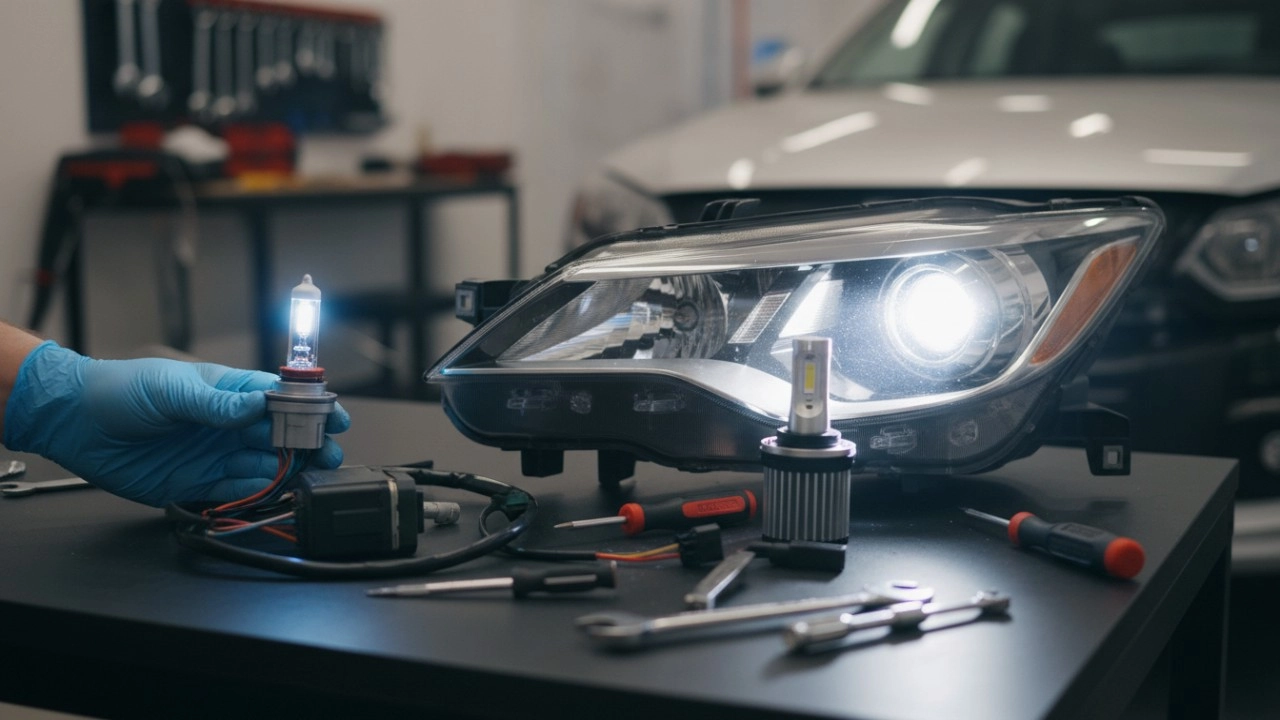
Modern plug and play led headlights are designed to be a direct swap.
1. Access: Open the hood and locate the dust cover behind the headlight assembly.
2. Remove: Twist the old halogen bulb counter-clockwise to unlock it, then disconnect the wiring harness.
3. Connect: Plug the LED bulb's connector into the car's harness. (Note: LEDs have polarity; if it doesn't light up, flip the plug 180 degrees).
4. Install: Insert the LED bulb into the housing and twist clockwise to lock.
Fan vs. Fanless LED Bulbs
This is the great debate in the LED community: fanless vs fan led bulbs.
· Fan-Cooled (Active Cooling):
o Pros: Can run at higher wattages, producing brighter light (10,000+ lumens).
o Cons: The fan is a moving part that can fail; slight noise; bulkier base.
o Best for: High beams or drivers who want maximum brightness.
· Fanless (Passive Cooling):
o Pros: Silent; highly reliable; compact size fits inside dust covers easily.
o Cons: Generally lower lumen output to prevent overheating.
o Best for: Fog lights, motorcycles, or difficult-to-reach headlight housings.
The Ideal Color Temperature
Color temperature is measured in Kelvin. The Kelvin color temperature scale determines the hue of the light.
· 4300K (Warm White): The color of standard halogens. Good for rain, but looks dated.
· 6000K (Crystal White): The industry standard for LEDs. It provides the best contrast for human eyes to pick up signs and road markings.
· 8000K (Blue/Cool White): While it looks "cool," the blue tint actually reduces visibility and causes higher eye fatigue.
· Recommendation: Stick to 6000K or 6500K for the best balance of style and safety.
Beam Pattern Matters
The most important tech spec is not brightness, but focus. The LED chips on the bulb stem must align exactly where the halogen filament used to be. If the chips are too thick or misaligned, the light will scatter, illuminating the treetops rather than the road and blinding oncoming traffic.
Common Troubleshooting: Flickering and Dash Errors
Even with plug and play led headlights, you might encounter minor hiccups due to your car’s computer.
What is CANbus?
Modern cars use a Controller Area Network (CANbus) to monitor vehicle health. Since LEDs draw very little power, the computer may think the bulb is blown.
· Symptoms: A "Bulb Out" warning on the dash, or the lights turn on and then immediately shut off.
· Solution: Install a CANbus decoder (also called an anti-flicker harness) between the LED plug and the car harness. This increases the resistance to mimic a halogen bulb.
Flickering Lights (PWM Issues)
Some vehicles (like Jeeps and Dodges) use Pulse Width Modulation (PWM) to extend bulb life. This sends pulsing electricity to the headlights. Halogens are slow to react, so you don't see the pulse. LEDs are instant, so they will strobe.
· Solution: A PWM module/capacitor is required to smooth out the power delivery.
Adjusting the Lock Ring
If your beam pattern looks weird (e.g., a dark spot in the middle of the road), the bulb orientation is likely wrong.
· The Rule: The LED chips should face 3 o'clock and 9 o'clock (horizontally).
· The Fix: Most premium bulbs have an adjustable collar. Loosen the set screw, rotate the bulb body until the chips are horizontal, and tighten it back up.
Conclusion
Upgrading to LED headlight bulbs is one of the most effective ways to modernize your vehicle and improve night-time safety. By choosing the right size (like H11 or 9005), sticking to a verified 6000K white light, and ensuring a precise beam pattern, you can enjoy superior visibility without blinding other drivers. Whether you need a fanless design for longevity or a high-output fan model for maximum brightness, the 2026 lineup offers a plug-and-play solution for every driver. Ready to see the difference? Check your vehicle's bulb size and start your upgrade today.
FAQ
Are aftermarket LED headlight bulbs legal for street use?
Regulations vary by location. In the US, FMVSS 108 sets strict standards. While many LED kits are sold for "off-road use only," some manufacturers ensure their beam patterns meet compliance standards to avoid glare. Always check local laws and look for DOT-compliant markings where applicable.
Do I need a CANbus decoder for my LED bulbs?
If your car is a newer model (European or American made after 2005), the computer may detect the lower power draw of LEDs as a "burnt bulb," causing flickering or dashboard errors. A CANbus decoder solves this by simulating the resistance of a halogen bulb.
Which is better: Fan or Fanless LED bulbs?
It depends on your needs. Fan-cooled bulbs are generally brighter because the fan allows for higher power/heat dissipation. Fanless bulbs are silent, have no moving parts to fail, and fit into smaller housing spaces, making them more durable but slightly less powerful.
Will LED bulbs blind oncoming drivers?
Not if they are high-quality and installed correctly. The blinding glare usually comes from cheap bulbs with poor LED chip placement or incorrect alignment. A good LED bulb mimics the filament position of a halogen bulb to preserve the sharp "cutoff line" of the beam.
If you have more questions or require a professional solution, please feel free to contact us at any time.
Recommended for you
Why Your Customers Complain About LED Headlight Flickering (And How Our CANbus Solutions Fix It)
The Ultimate B2B Guide to Plug and Play LED Headlights: 1:1 Design, Specs & CANbus Solutions
LED vs. HID vs. Laser: Which Headlight Technology is Actually the Brightest for 2026?
Evitek Launches Smart Control Headlight—N14 Series, Redefining Driving Lighting Experience
FAQs
Company
How many employees in Evitek?
Can I vist Evitek on site?
Logistics
How long does international shipping take?
Product
Can I get some samples to test first?
You May Also Like
Get More Resources
If you have any comments or good suggestions, please leave us a message, later our professional staff will contact you as soon as possible.
Start Your Wholesale Order / Request OEM Solutions
Partner directly with the factory for competitive pricing and priority support. Please provide your business details and estimated order volume (MOQ applies) so our sales engineers can tailor the best quote for your market.
Contact us


6th Floor, Building B, Liando U Valley, No. 29, Bishan Street, Huangpu District, Guangzhou, China

© 2026 CARNEON. All Rights Reserved. Privacy Policy | Terms and Conditions | Sitemap

Whatsapp: +8618688487142