


How Does Automotive Interior LED Lighting Improve Driving Comfort?
Quick Answer
Automotive interior LED lighting can improve driving comfort by providing controlled, low-glare illumination for controls, storage areas, and cabin surfaces without competing with the road view. A suitable solution depends on optical distribution, brightness range, color temperature, flicker behavior, and thermal design. Supplier support may include specification review and sample coordination, but final choices depend on the vehicle, testing plan, and installation conditions.
How Supports Projects
Project support should begin with a clear review of the lighting location, available power, control method, target brightness, color appearance, and mounting constraints. These details help determine whether a flexible light source, compact module, diffused optic, or another configuration is appropriate for the intended cabin environment.
Buyers should also request evidence for electrical behavior, thermal performance, optical uniformity, material compatibility, and electromagnetic considerations before approving a production design. MOQ, lead time, testing scope, and quotation must be confirmed for each project because vehicle platform, order volume, tooling requirements, and target market can change the commercial and technical conditions.
Discuss Your Interior Lighting Requirements
Share the target vehicle or cabin area, market, installation dimensions, available voltage, control interface, brightness range, color preference, and expected order volume so suitable options and sample steps can be discussed. Send your project brief through www.carneonlighting.com or email nick@evitekhid.com to begin a specification review.
Deep-Dive FAQs
How does ambient light reduce visual fatigue during nighttime driving?
Ambient illumination can reduce the abrupt contrast between a dark cabin and bright instrument displays or screens. When surrounding surfaces have moderate, evenly distributed luminance, the eyes may need fewer rapid adaptation changes while the driver shifts attention between the road, mirrors, and interior controls. The benefit depends on placement and intensity: light directed toward the driver, windshield, or side glass can create distraction or reflections. A practical design uses indirect illumination, diffuse output, and independent dimming rather than treating the cabin as a uniformly bright space. Validation should include night driving, different occupant positions, and review of reflected images in glazing.
Which color temperature supports comfort without distracting the driver?
Color temperature should be selected alongside brightness, surface reflectance, and the vehicle’s display strategy. Neutral or slightly warm white light is commonly considered comfortable for general cabin visibility because it can appear less harsh than a high-blue-content source at night. However, there is no universal value that suits every vehicle interior. Blue-rich light can influence perceived alertness and nighttime comfort, while strongly colored light may reduce the clear recognition of materials and controls. The correct process is to compare several settings inside the actual trim environment, checking skin tones, display legibility, glare, reflections, and perceived visual hierarchy from the driver’s seat.
Can interior LEDs create windshield reflections or glare at night?
Yes. Reflections can occur when a luminous source or glossy trim surface falls within the driver’s viewing geometry. The risk is affected by LED position, optic angle, surface gloss, windshield curvature, dashboard shape, and brightness relative to the outside scene. A diffuser does not automatically solve the problem if it remains visible as a bright source. Designers should inspect the complete assembly from representative eye points, including different seat positions and occupants, and test both clean and contaminated surfaces where relevant. Light guides, concealed emitters, matte interfaces, shielding, and calibrated dimming can help, but each change requires optical validation.
How should brightness adapt across different driving conditions?
Brightness should respond to the visual context rather than remain fixed at one level. Daylight entering through the glazing, nighttime darkness, tunnel transitions, parking, and passenger reading activity create different comfort requirements. A useful control strategy can combine manual adjustment with vehicle-state signals, provided the transition is smooth and does not introduce sudden changes in the driver’s peripheral field. The calibration target should preserve sufficient cabin visibility while keeping the road scene and instrument cluster visually dominant. Engineers should define minimum and maximum output, ramp time, failure behavior, and override logic, then verify the behavior during real driving and bench testing.
What installation errors cause hotspots, flicker, or uneven illumination?
Hotspots commonly result from placing discrete emitters too close to a visible surface, using an unsuitable diffuser distance, or failing to account for bends and joints in a light guide. Uneven output can also arise from voltage drop, inconsistent coupling, poor connector seating, or variations in trim tolerances. Flicker may be linked to low-frequency pulse-width modulation, unstable drivers, insufficient power filtering, or interaction with vehicle control electronics. Installation drawings should define bend radius, emitter spacing, connector orientation, grounding, and allowable tolerances. Validation should include camera-based checks where appropriate, human observation, low-voltage conditions, and operation across the expected temperature range.
Do LED controls affect vehicle electronics and passenger comfort?
They can. An interior lighting circuit may interact with dimming controls, body controllers, communication networks, or other loads if its electrical characteristics are not defined correctly. Inadequate filtering or wiring can contribute to electromagnetic interference, while poorly chosen control frequencies may produce visible or camera-detectable flicker. Passenger comfort is also affected by control latency, abrupt transitions, audible driver noise, and inconsistent brightness between zones. The design review should document input voltage range, current demand, dimming method, inrush behavior, grounding, connector requirements, and diagnostic states. Electrical and EMC evaluation should be performed on the complete installed assembly rather than on the LED component alone.
Recommended for you
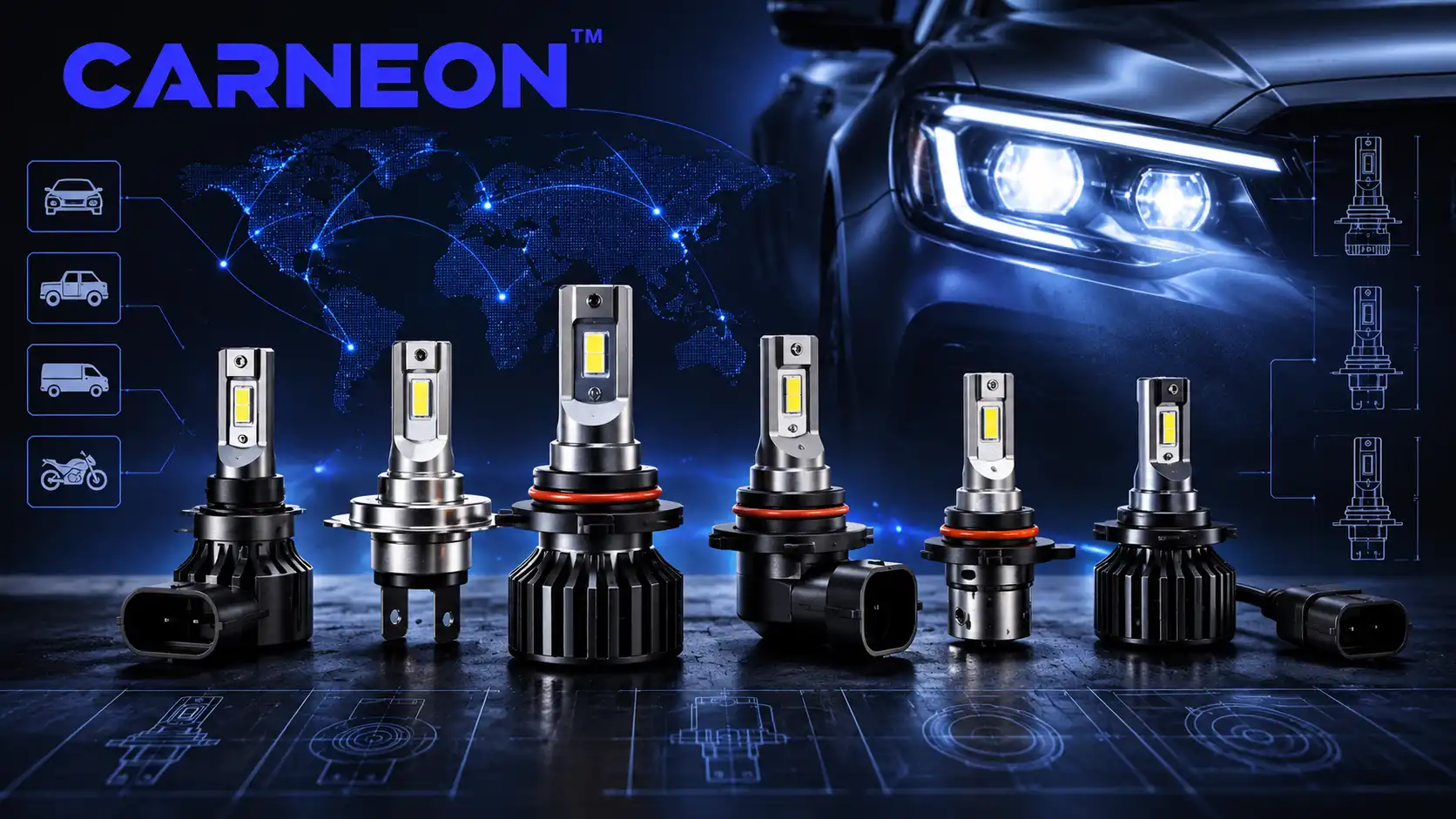
LED Headlight Bulb Sizes & Applications: A B2B Market Sourcing and Fitment Guide
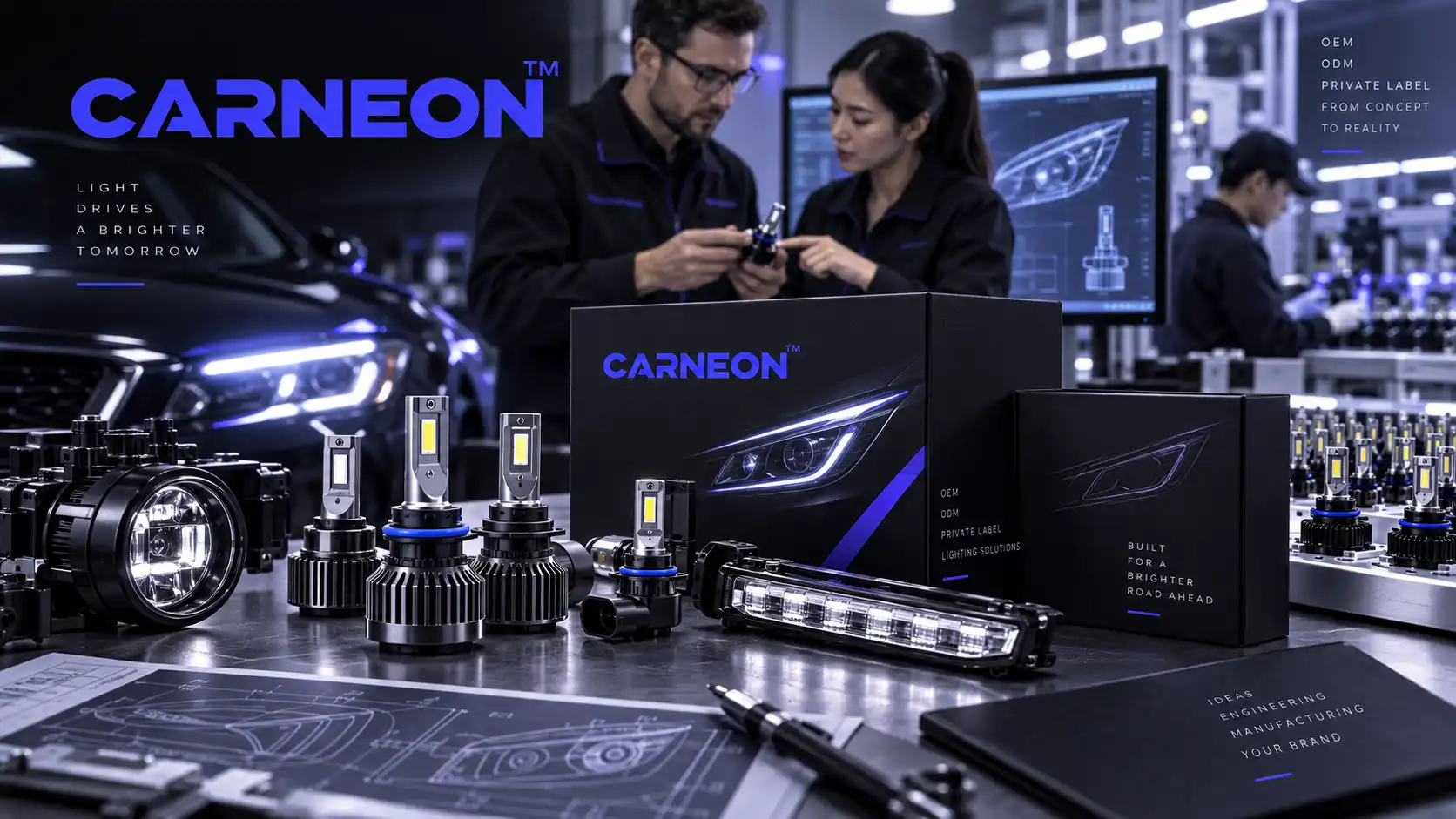
How to Launch a Private Label Automotive LED Lighting Brand: An OEM/ODM Roadmap for Distributors
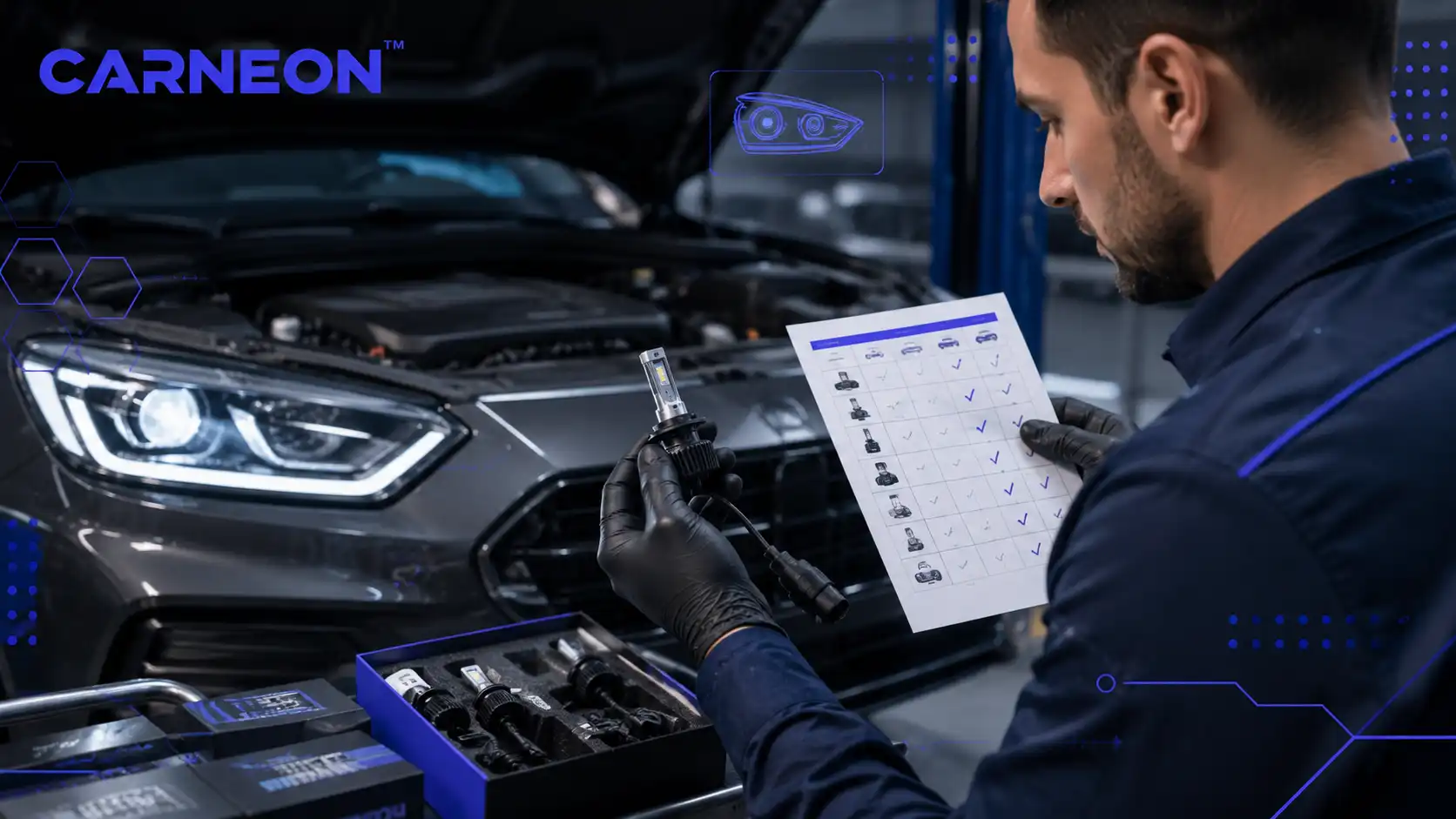
LED Headlight Troubleshooting for Auto Parts Distributors: Installation & Compatibility Workflow

The Technical Guide to Identifying High-Performance LED Headlight Bulbs (2026 Edition)
You May Also Like



Get More Resources
If you have any comments or good suggestions, please leave us a message, later our professional staff will contact you as soon as possible.
Start Your Wholesale Order / Request OEM Solutions
Partner directly with the factory for competitive pricing and priority support. Please provide your business details and estimated order volume (MOQ applies) so our sales engineers can tailor the best quote for your market.
Contact us


6th Floor, Building B, Liando U Valley, No. 29, Bishan Street, Huangpu District, Guangzhou, China

© 2026 CARNEON. All Rights Reserved. Privacy Policy | Terms and Conditions | Sitemap

Whatsapp: +8618688487142