


Do LED headlight bulbs require CANbus adapters? | Insights by CARNEON
- 1. My 2016 BMW shows a ’bulb out’ error after fitting LED bulbs — do I need a CANbus adapter or ECU reprogramming?
- 2. My LEDs flicker or dim with DRL/PWM on a 2018 Volkswagen. Do I need a CANbus decoder or a PWM-compatible driver?
- 3. Can I safely use simple load resistors to stop hyperflashing and error messages on Honda/Acura multiplexed systems?
- 4. How can I reliably determine whether my vehicle’s headlight circuit uses CAN bus, LIN, or a simple grounded circuit before buying CANbus-compatible LED bulbs?
- 5. Will fitting CANbus adapters affect adaptive headlight features (auto-leveling, cornering) on Mercedes or Audi, and how do I preserve them?
- 6. Are “CANbus ready” LED bulbs truly universal — what specs should I check to avoid radio interference, warnings, and incompatibility?
- Conclusion: Advantages of using proper CANbus-compatible LED solutions
1. My 2016 BMW shows a ’bulb out’ error after fitting LED bulbs — do I need a CANbus adapter or ECU reprogramming?
If your BMW reports a bulb out or check light message after installing LED headlight bulbs, that symptom usually means the vehicle's body control module or headlight ECU is monitoring filament-bulb current and expects a higher current than the LED draws. There are three realistic remedies:
1) Install a CANbus decoder or high-quality CANbus-compatible LED with an integrated decoder. These devices either emulate the original filament bulb current signature or respond to the vehicle's communication so the ECU stops flagging a fault.
2) Use properly sized load resistors in simple circuits that only monitor current (common on older vehicles). Load resistors raise the circuit's current draw to mimic a halogen bulb. Important: choose the correct wattage rating (typically 50W+ for headlight circuits) and mount resistors away from plastics because they run hot. Also measure actual current draw to size the resistor correctly — aim to emulate the factory bulb current rather than using arbitrary values.
3) Reprogram or re-flash the vehicle module. On many BMW models, dealers or advanced garages can recode the headlight module via dealer-level tools to accept LED lamps. This is the cleanest fix because it preserves diagnostics and adaptive functions, but it requires access to factory tools and may affect warranty or vehicle compliance.
Which to choose? For most owners, a high-quality CANbus decoder or a CANbus-ready LED kit is the fastest solution. If the car has advanced adaptive features (AFL/Adaptive LED), have a dealer/qualified technician reprogram the module rather than relying solely on resistors.
2. My LEDs flicker or dim with DRL/PWM on a 2018 Volkswagen. Do I need a CANbus decoder or a PWM-compatible driver?
Flicker or visible PWM dimming usually means the headlight circuit is using a pulse-width-modulated (PWM) signal to control brightness or daytime running lights (DRL). Many aftermarket LEDs and drivers assume a steady DC supply and will flicker or go to partial brightness under PWM.
Solutions and steps:
Confirm PWM: Use a digital oscilloscope or a multimeter with frequency/PWM detection to check for PWM on the positive or negative lead. Many modern vehicles use PWM frequencies from a few Hz up to several kHz.
Use PWM-tolerant drivers: Buy LED bulbs or drivers specified for the PWM frequency used by your vehicle. Reputable CANbus-compatible LED kits list PWM tolerance or include an active decoder that conditions the signal.
CANbus decoders that decode PWM: High-end CANbus decoders do more than add load; they actively interpret PWM and feed a stable DC current to the LED, eliminating flicker and preserving DRL sequencing.
Avoid cheap resistors for PWM circuits: Resistive load tricks won’t correct PWM timing and can mask the symptom rather than fixing it. They also waste energy as heat.
In short: for PWM circuits, prioritize LED drivers or CANbus decoders rated for PWM rather than simple load resistors.
3. Can I safely use simple load resistors to stop hyperflashing and error messages on Honda/Acura multiplexed systems?
Short answer: usually not recommended without verifying the circuit architecture. Many modern Hondas, Acuras and similar vehicles use multiplexed wiring and body control modules that monitor circuits beyond just current draw. They may use diagnostic communication over the CAN bus or LIN bus to check lamp status. Installing a resistor that simply increases current can sometimes stop hyperflash but won’t satisfy a module expecting digital confirmation.
Risks and considerations:
Multiplexed systems: These use single-wire networks or modules that expect a specific electrical signature or digital reply. Adding a resistor can hide the symptom but may confuse diagnostic systems or create unpredictable behavior.
Heat and safety: Resistors used for turn signals or headlights dissipate significant heat. They must be mounted on metal surfaces away from wiring looms and plastic trim.
Long-term reliability: Resistive solutions consume additional battery power and can accelerate connector or fuse stress.
Best practice: first identify whether the vehicle uses a multiplexed controller (look up service manual wiring diagrams or consult community forums for your exact VIN/model). If it does, use a CANbus decoder or a CANbus-compatible LED that provides the expected handshake or digital emulation. When in doubt, consult a professional with the proper diagnostics tools.
4. How can I reliably determine whether my vehicle’s headlight circuit uses CAN bus, LIN, or a simple grounded circuit before buying CANbus-compatible LED bulbs?
Practical diagnostic checklist:
1) Check the owner's manual or factory service manual wiring diagrams for the headlight system type (CAN, LIN, or direct). Service manuals and OEM wiring diagrams are definitive.
2) Visual inspection of connectors: Vehicles with a headlight control module often have multi-pin connectors and extra wiring coming out of the headlamp assembly beyond two wires. Simple halogen circuits typically use a 2- or 3-wire plug.
3) Use a multimeter/oscilloscope: Measure the headlight feed under various conditions (on/off, DRL, high/low). PWM looks like a square wave; CAN/LIN will have serial digital signals on specific bus lines. If you see high-frequency serial data on separate single-wire lines, that indicates networked control.
4) VIN-specific research: Search online with your exact model/year/VIN — many enthusiast forums and retrofit guides detail whether a platform uses CAN-controlled headlights.
5) Professional scan: A quick OBD2 diagnostic scan or an aftermarket scan tool that can read body-control modules will reveal whether the bulbs are monitored by a headlight module.
Takeaway: confirm the control method before buying. If the car uses CAN or LIN for headlight status, opt for bulbs with CANbus decoders or plan for module coding rather than only using load resistors.
5. Will fitting CANbus adapters affect adaptive headlight features (auto-leveling, cornering) on Mercedes or Audi, and how do I preserve them?
Adaptive lighting systems rely on feedback to the ECU from multiple sensors and sometimes from the headlamp module itself. Poorly chosen adapters can break that feedback, disable features, or trigger fault codes.
How to preserve adaptive features:
Use OEM-grade or manufacturer-approved LED retrofit modules: These are designed to provide the expected electrical signature and handshake to the headlight ECU.
Integrated decoders vs. simple resistors: Integrated CANbus decoders emulate the digital communication and are less likely to disrupt adaptive features than simple resistors, which only change current draw.
Avoid blocking communications: Don’t isolate the headlight module from the vehicle network. Some low-cost decoders intercept signals incorrectly and can block adaptive controls.
Professional installation and coding: For many luxury vehicles, the correct approach is an LED retrofit performed by a specialist who can re-code the headlight module to the new lamp type using OEM tools. This preserves auto-leveling, AFS, cornering lights and prevents limp-home behavior.
Verify diagnostics after install: Use a scan tool to clear and monitor error codes, and run the vehicle through adaptive headlight self-tests.
If you want to retain all adaptive features reliably, count on either OEM conversions or a reputable retrofit company that offers module recoding and a guarantee.
6. Are “CANbus ready” LED bulbs truly universal — what specs should I check to avoid radio interference, warnings, and incompatibility?
CANbus ready is a marketing term and not a standard. Not all products that claim CANbus compatibility perform the same in practice.
Key specs and checks before you buy:
Decoder type: Passive resistive vs. active digital decoder. Active decoders emulate digital responses and are preferred for modern vehicles.
PWM tolerance: If your vehicle uses PWM dimming, check the LED’s driver specification for PWM frequency tolerance.
Current emulation: Look for stated equivalent wattage/current emulation (e.g., mimics 55W halogen at ~4–5A). Vendors that provide measured current charts for their bulbs are more trustworthy.
EMC/EMI and RFI suppression: Quality LEDs state compliance with electromagnetic compatibility standards or include radio-frequency interference suppression to avoid FM/AM disruption.
Operating voltage range and surge protection: Vehicles can have voltage spikes; a robust driver with surge protection reduces risk of ECU faults.
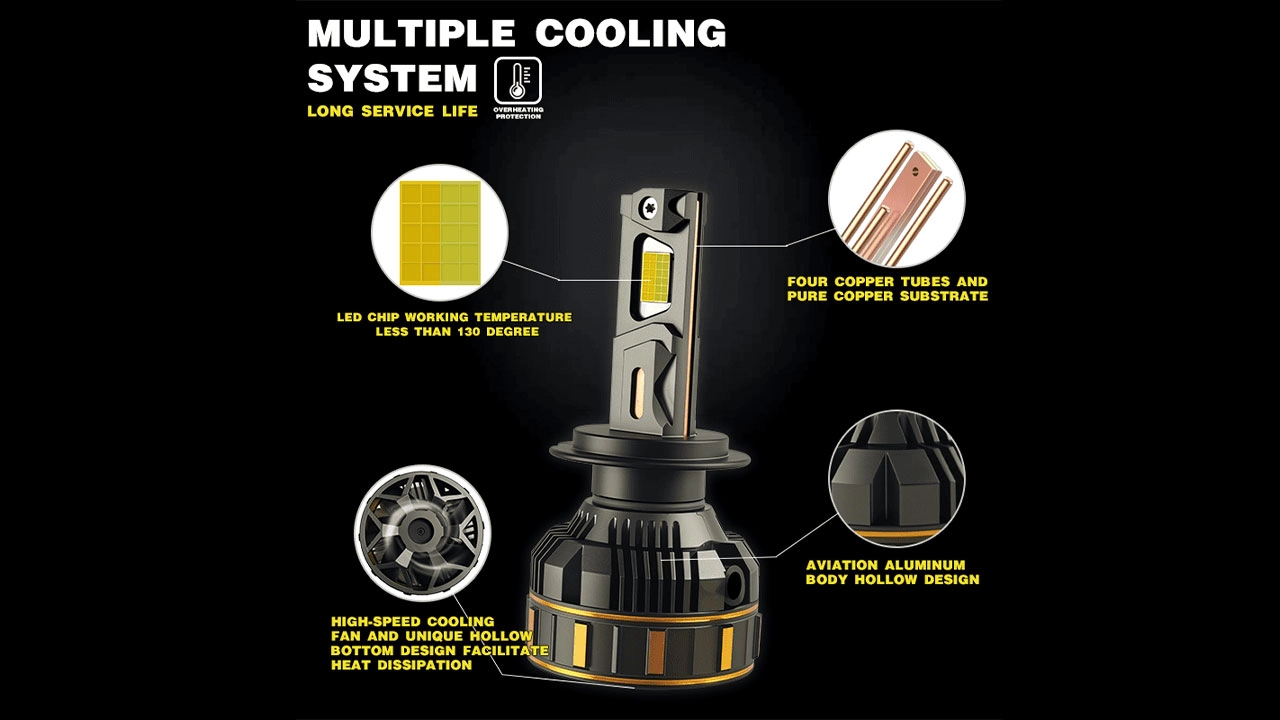
Thermal management and IP rating: Good heat-sinking or active cooling reduces driver stress and maintains stable light output, reducing the chance of errors caused by thermal throttling.
Warranty and return policy: A supplier willing to take returns and replace items for fitment issues is critical — many fits are vehicle-specific.
Real-world compatibility reports: Check community threads for your exact year/model, and prefer vendors who publish tested vehicle lists.
By checking these specifications and verifying with real-world reports, you reduce the chance of CAN bus error messages, LED flicker, and radio interference.
Practical installation checklist (do this before installing any LED kit):
- Read vehicle wiring diagrams or VIN-specific fitment notes.
- Test for PWM vs steady DC with proper tools.
- Choose digital CANbus decoders when vehicle modules monitor lamp status digitally.
- Mount load resistors on metal and use proper connectors and fuses if you must use them.
- After fitment, scan for and clear codes, and test adaptive features and DRLs in different modes.
- Keep manufacturer receipts and test drives documented for warranty claims.
Conclusion: Advantages of using proper CANbus-compatible LED solutions
Using the right CANbus adapter or a CANbus-compatible LED kit prevents CAN bus error messages and bulb-out warnings, eliminates LED flicker and hyperflash, preserves adaptive and DRL functions when correctly matched, reduces heat-related failures with proper thermal design, and minimizes radio interference when EMC-tested drivers are used. For most modern vehicles with monitored headlight circuits, an active CANbus decoder or an LED kit explicitly tested and guaranteed for your model gives the most reliable, long-term result.
For a tailored recommendation and a quote for vehicle-specific CANbus-compatible LED kits or professional retrofit and coding services, contact us at www.carneonlighting.com or email nick@evitekhid.com.
Recommended for you
Why Your Customers Complain About LED Headlight Flickering (And How Our CANbus Solutions Fix It)
The Ultimate B2B Guide to Plug and Play LED Headlights: 1:1 Design, Specs & CANbus Solutions
LED vs. HID vs. Laser: Which Headlight Technology is Actually the Brightest for 2026?
Evitek Launches Smart Control Headlight—N14 Series, Redefining Driving Lighting Experience
FAQs
Company
When is Evitek founded?
Customized Service
How long does the customization process take?
Product
What's the difference Evitek products and others?
Logistics
What payment methods do you accept?
You May Also Like
Get More Resources
If you have any comments or good suggestions, please leave us a message, later our professional staff will contact you as soon as possible.
Start Your Wholesale Order / Request OEM Solutions
Partner directly with the factory for competitive pricing and priority support. Please provide your business details and estimated order volume (MOQ applies) so our sales engineers can tailor the best quote for your market.
Contact us


6th Floor, Building B, Liando U Valley, No. 29, Bishan Street, Huangpu District, Guangzhou, China

© 2026 CARNEON. All Rights Reserved. Privacy Policy | Terms and Conditions | Sitemap

Whatsapp: +8618688487142