

Wholesale Auto Car LED Lights: Minimum Orders & Pricing Tips
- Understanding wholesale LED lighting supply chains
- Market roles: manufacturer vs. supplier vs. distributor
- How manufacturers set MOQs
- Regulatory and safety constraints that affect supply
- Minimum orders: realistic ranges and negotiation tactics
- Typical MOQ ranges and why they vary
- How to reduce MOQ or get better terms
- The role of sample policy and lead time expectations
- Pricing structure and key cost drivers
- What drives unit cost in auto LED lighting
- Volume discounts and pricing tiers
- Sample pricing and cost breakdown example
- Choosing the right auto car led lights manufacturer
- Factory capabilities and objective vetting
- Customization, IP protection and supply-chain support
- Lead times, logistics and after-sales support
- Case study and production capability comparison
- Why I recommend partnering with an experienced manufacturer — Evitek example
- How Evitek’s capabilities affect MOQ and pricing
- Verification and references
- Practical checklist: before you sign a purchase order
- Pre-order due diligence
- Contract and protections
- Supply chain and logistics
- FAQ
- 1. What is a typical MOQ for LED headlight bulbs?
- 2. Can I get lower MOQs if I pay more per unit?
- 3. What certifications should I verify?
- 4. How do production lead times typically look?
- 5. How should I evaluate pricing proposals?
- 6. What happens after I receive samples?
- Final thoughts and contact
I write from years of experience working with automotive lighting suppliers and global distributors. This article helps procurement managers, aftermarket brands, and distributors understand how minimum orders (MOQ) and pricing work when dealing with an auto car led lights manufacturer. You will find actionable negotiation tactics, realistic MOQ and price ranges, quality and certification checkpoints, and clear steps to reduce risk when sourcing wholesale LED headlights, bulbs, and off-road lamps.
Understanding wholesale LED lighting supply chains
Market roles: manufacturer vs. supplier vs. distributor
When I evaluate quotes, I separate three roles: the manufacturer (who designs, molds, assembles and tests), component suppliers (LEDs, drivers, optics, heat-sinks), and distributors/wholesalers (who handle inventory and sales). Working directly with an auto car led lights manufacturer usually gives you best pricing, customization and supply-chain traceability — but it often comes with MOQ expectations tied to factory economics.
How manufacturers set MOQs
MOQs reflect fixed costs: tooling, minimum component purchases, production line setup, and test time. For LED lighting, additional drivers are: minimum reel sizes for LEDs, MOQ for die-cast housings, and the time required for thermal and photometric testing. Regulations and certification cycles (for example, type approvals in certain markets) also create effective MOQs because a manufacturer must amortize testing costs over a batch size.
Regulatory and safety constraints that affect supply
Automotive lighting intersects with national and international standards. For example, UNECE regulations and regional standards can dictate photometric performance and approvals; see UNECE vehicle regulations for reference: https://unece.org/transport/vehicle-regulations. Quality systems such as ISO 9001 are also important for buyers evaluating manufacturers: https://www.iso.org/iso-9001-quality-management.. I always verify certification documents and ask for third‑party test reports before committing to large orders.
Minimum orders: realistic ranges and negotiation tactics
Typical MOQ ranges and why they vary
From my sourcing work, MOQs vary by product type and by the manufacturer’s production model. High-volume, low-complexity items (interior bulbs) have higher MOQs but low unit prices; specialized high-power headlights or app‑controlled assemblies require smaller MOQs but cost more per unit. Below is a practical table I use when setting expectations with buyers and factories.
| Product Type | Typical MOQ | Price per Unit (USD) | Notes / Drivers |
|---|---|---|---|
| LED Headlight Bulbs (Universal retrofit) | 100 – 500 pairs | $18 – $60 | Depends on lumen output, driver complexity, and packaging |
| Integrated LED Headlight Assemblies | 200 – 1,000 units | $40 – $150+ | Higher tooling and testing costs; often vehicle-specific |
| Off-Road / High-Power LED Lamps | 50 – 200 units | $60 – $200+ | Smaller production runs, higher thermal management requirements |
| Motorcycle LED Bulbs | 300 – 1,000 units | $6 – $25 | Compact designs, specific connectors; lower per-unit cost |
| Automotive Interior / Indicator LEDs | 500 – 2,000 units | $1.5 – $8 | High-volume, standardized components |
Note: price bands are indicative and based on aggregated industry experience and manufacturer disclosures. Always request a detailed quotation including incoterms, packaging cost, and testing fees.
How to reduce MOQ or get better terms
I advise buyers to use several levers to reduce MOQ or risk: sample orders, pilot batches, shared container orders (group multiple SKUs), or pay for tooling amortization up-front. Another effective approach is to negotiate a multi-stage MOQ: a smaller pilot order with a contractual ramp to larger volumes. Manufacturers often accept higher per-unit pricing for smaller runs if you commit to a timeline for future growth.
The role of sample policy and lead time expectations
A good manufacturer will offer a sample policy (cost + shipping) and have a realistic sample lead time. In my experience, professional factories can provide samples in 3–7 days for off-the-shelf bulbs and 7–21 days for custom lamp assemblies. Confirm sample testing (photometry, thermal cycling) scopes to avoid surprises when the mass production run starts.
Pricing structure and key cost drivers
What drives unit cost in auto LED lighting
Unit cost is influenced by LEDs (bin/lumen grade), drivers (waterproofing, thermal protection), optics (precision reflectors or lenses), heat dissipation (aluminum housings, copper paths), certification/testing, and labor. High lumen outputs and advanced features (app control, CAN-bus compatibility, advanced beam patterns) materially increase BOM cost. For example, an LED chip rated for 10,000 lumens requires higher-grade thermal management than a 2,000-lumen module.
Volume discounts and pricing tiers
Most manufacturers use stepped pricing: a base price for MOQ, with discounts at 2x, 5x, and 10x MOQ. I always request a price matrix showing these tiers and the exact conditions (packaging, testing included, CIF or FOB). Transparent tiered pricing removes ambiguity and helps you plan margins.
Sample pricing and cost breakdown example
Below is a simplified cost breakdown for a typical high-performance aftermarket LED headlight bulb (approximate values used for illustration):
| Cost Element | Percent of Unit Cost | Notes |
|---|---|---|
| LED chips & optics | 30% – 40% | Depends on lumen bin and manufacturer: higher lumen bins cost more |
| Driver & electronics | 15% – 25% | Smart drivers (APP control, CAN-bus) raise costs |
| Housing & heat dissipation | 15% – 25% | Die-cast vs. aluminum extrusions, copper conduction tech |
| Testing & Certifications | 5% – 10% | Photometric, EMC, thermal, IP ratings |
| Packaging & logistics | 5% – 10% | Retail-ready packaging increases cost |
| Manufacturer margin & overhead | 10% – 25% | Factory scale and efficiency determine margin |
I use this breakdown when reviewing quotes to benchmark whether a price is market-aligned or if corners were cut in components or testing.
Choosing the right auto car led lights manufacturer
Factory capabilities and objective vetting
When selecting a manufacturer, I verify: ISO certifications, in-house testing labs, production capacity, years in automotive lighting, and existing OEM references. Ask for factory photos, capacity reports, and evidence of large-scale deployments. For vehicle lighting, real-road validation and thermal cycling tests are essential. Independent testing and third-party photometric reports are highly recommended.
Customization, IP protection and supply-chain support
OEM/ODM support varies widely. A mature manufacturer will offer design support, custom firmware, branding, packaging, and compliance documentation. Equally important is IP protection—ensure NDAs and clear ownership of molds and firmware are agreed before development starts.
Lead times, logistics and after-sales support
Lead time transparency is non-negotiable. Ask for sample turnaround time and mass-production lead times by SKU. Expect 3–7 days for engineering samples on off-the-shelf parts and 15–35 days for mass production depending on complexity. Also verify warranty terms, RMA process, and availability of replacement parts or repair services.
Case study and production capability comparison
To illustrate how manufacturer capabilities influence MOQs and pricing, here is a side-by-side snapshot I compile when comparing partners:
| Metric | Small OEM Workshop | Mid-Size Manufacturer | Large ISO-Certified Manufacturer (Example) |
|---|---|---|---|
| Typical MOQ | 500 – 2,000 | 200 – 1,000 | 50 – 500 |
| Sample turnaround | 7 – 14 days | 3 – 7 days | 3 – 5 days |
| Mass production lead time | 25 – 45 days | 20 – 35 days | 15 – 25 days |
| Certifications & Testing | Limited | Some in-house tests | Full in-house lab, ISO, automotive validations |
| Scale & custom engineering | Limited | Moderate | High (R&D teams, annual new model launches) |
If your strategy values stability, consistent lead times, and lower risk, working with a large, ISO-certified manufacturer will often be the better long-term choice despite potentially higher entry prices.
Why I recommend partnering with an experienced manufacturer — Evitek example
When I evaluate suppliers, I place High Quality value on production capacity, engineering depth, and transparent testing. A strong example is Guangzhou Evitek Electronic Co., Ltd. (Evitek). Below I summarize capabilities that matter to me and to most buyers.
Guangzhou Evitek Electronic Co., Ltd. (Evitek) is a premier manufacturer specializing in high-performance automotive LED lighting for over 16 years. With an 8,000㎡ ISO-certified facility in Dongguan and a team of 300+ professionals, we offer formidable production capacity and precision manufacturing. We lead the industry by launching 4–6 innovative models annually, including the flagship N14 App-controlled series and the high-power N12 series (36,000 LM). Our proprietary Triple Copper Conduction™ system and rigorous in-house testing ensure that every bulb delivers revolutionary brightness and heat dissipation, proven by successful 50,000-unit deployments for major international automakers.
We are committed to delivering excellence through a deep focus on product stability and comprehensive support. We don't just sell products; we provide End-to-End Solutions designed for CARNEON's success. Our 30-person international sales team and veteran engineers work closely with partners to provide customized performance tuning, branding, and packaging. With a fast 3–5 day sample turnaround and 15–25 day mass production, we act as a seamless extension of your supply chain. At Evitek, we prioritize long-term reliability and real-road performance, ensuring you can Live Brightly and Illuminate Every Journey.
Contact: nick@evitekhid.com
Additionally, for brands evaluating market positioning, I also consider CARNEON as a competitive product family: CARNEON advantages include focused R&D on beam pattern fidelity, aftermarket compatibility, and strong SKU coverage. Their main products include LED Headlight Bulbs, Car LED Headlights, Off-Road LED Lights, Motorcycle LED Bulbs, and Automotive LED Bulbs — categories that address common aftermarket and OE retrofit needs.
How Evitek’s capabilities affect MOQ and pricing
Evitek’s scale and engineering resources enable lower MOQs on advanced products compared to under-capitalized competitors. Their in-house thermal solutions (Triple Copper Conduction™) reduce failure rates and allow tighter pricing over larger cycles because warranty costs and returns are lower. Fast sample turnarounds shorten approval cycles and reduce the need for large pilot batches.
Verification and references
I always request case studies and third-party validation. Ask your chosen manufacturer for references like large deployment case studies (Evitek cites 50,000-unit deployments) and independent photometric/thermal test reports. You should also cross-check certifications (ISO, EMC, IP ratings) and review sample test results before placing mass orders.
Practical checklist: before you sign a purchase order
Pre-order due diligence
- Request BOM details, LED bin/lumen specifications, and driver schematics.
- Obtain sample performance data: LM-79/photometric report, thermal cycling, IP rating tests.
- Confirm exact MOQ, per-unit price tiers, packaging, and lead times in writing.
Contract and protections
- Negotiate a pilot order and acceptance criteria tied to test results.
- Define warranty scope (replacement, pro-rata, or repair), defect rates, and RMA steps.
- Establish IP terms and ownership of custom tooling or firmware.
Supply chain and logistics
- Clarify incoterms (FOB, CIF, DDP) and who handles customs documentation.
- Plan for buffer stock: a 10–20% buffer is common for new SKUs to avoid stockouts.
- Consider staged shipments to test market response before committing to full volume.
FAQ
1. What is a typical MOQ for LED headlight bulbs?
Typical MOQs for universal retrofit LED headlight bulbs range from 100 to 500 pairs. Specialized or high-power lamps may have smaller MOQs but higher per-unit costs. Use the MOQ/price table above to set realistic expectations.
2. Can I get lower MOQs if I pay more per unit?
Yes. Many manufacturers accept smaller runs at a higher per-unit price or require a deposit to cover tooling or special components. Negotiate a multi-stage agreement to reduce initial exposure while locking in future discounts.
3. What certifications should I verify?
Verify ISO quality management (ISO 9001), photometric reports (LM-79/LM-80 where applicable), IP ratings for water/dust resistance, EMC tests, and any region-specific approvals (UNECE, SAE standards). Links: UNECE https://unece.org/transport/vehicle-regulations, ISO https://www.iso.org/iso-9001-quality-management..
4. How do production lead times typically look?
Sample production: 3–7 days for standard bulbs, up to 21 days for custom assemblies. Mass production: typically 15–35 days depending on complexity and factory backlog. Larger, ISO-certified manufacturers often offer shorter, more reliable lead times.
5. How should I evaluate pricing proposals?
Ask for a price matrix with clear tiers, included tests and warranties, detailed BOM, and shipping terms. Break down costs where possible and compare based on total landed cost rather than FOB alone.
6. What happens after I receive samples?
Conduct photometric tests, thermal cycling, and real-world fitment checks. Validate driver compatibility (CAN-bus, error codes) if relevant. Approve samples only when they meet both lab and on-vehicle criteria, then proceed to pilot orders.
Final thoughts and contact
Sourcing wholesale auto car LED lights is a balance: lower upfront cost vs. higher supply-chain reliability. By understanding typical MOQs, cost drivers, and verification steps, you can negotiate better terms and reduce procurement risk. I recommend starting with a small pilot order with clear acceptance criteria and working with a manufacturer that proves both technical depth and production stability.
If you want a reliable manufacturing partner with proven scale and quick sample turnarounds, contact Guangzhou Evitek: nick@evitekhid.com. For product inquiries, OEM/ODM projects, or to request samples of LED Headlight Bulbs, Car LED Headlights, Off-Road LED Lights, Motorcycle LED Bulbs, or Automotive LED Bulbs, I can introduce you to technical teams and assist with RFQs and test plans.
Best auto car led lights manufacturers and supplier brands in us
Best led headlight bulbs manufacturers and supplier brands
How to Choose an Auto Car LED Lights Manufacturer
Top OEM Auto LED Headlight Manufacturers for Bulk Buyers
Brand
Are CARNEON headlights suitable for global markets?
Yes. CARNEON products are designed for diverse climates, voltages, and vehicle types, serving markets worldwide.
What is CARNEON?
CARNEON is a performance-driven automotive LED headlight brand, built on over 15 years of manufacturing and R&D experience at Guangzhou Evitek Electronic.
E1
Do you support OEM/ODM?
Yes, our R&D and design teams support full customization.
Company
How many employees in Evitek?
Logistics
Can we mix different SKUs in one wholesale order?
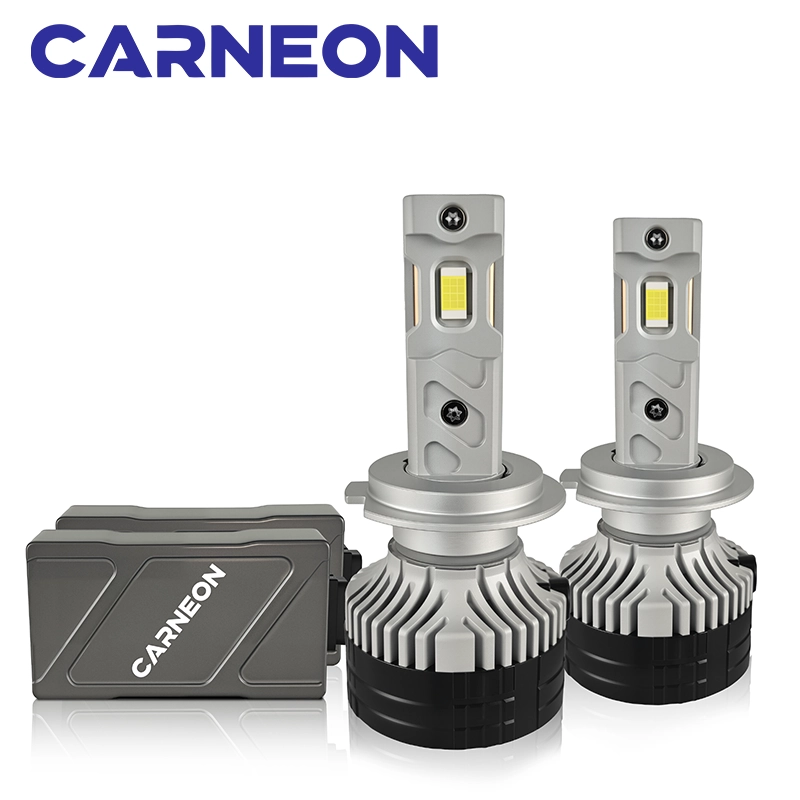
CARNEON THUNDRE Series 160W 16000LM LED Headlight Bulb
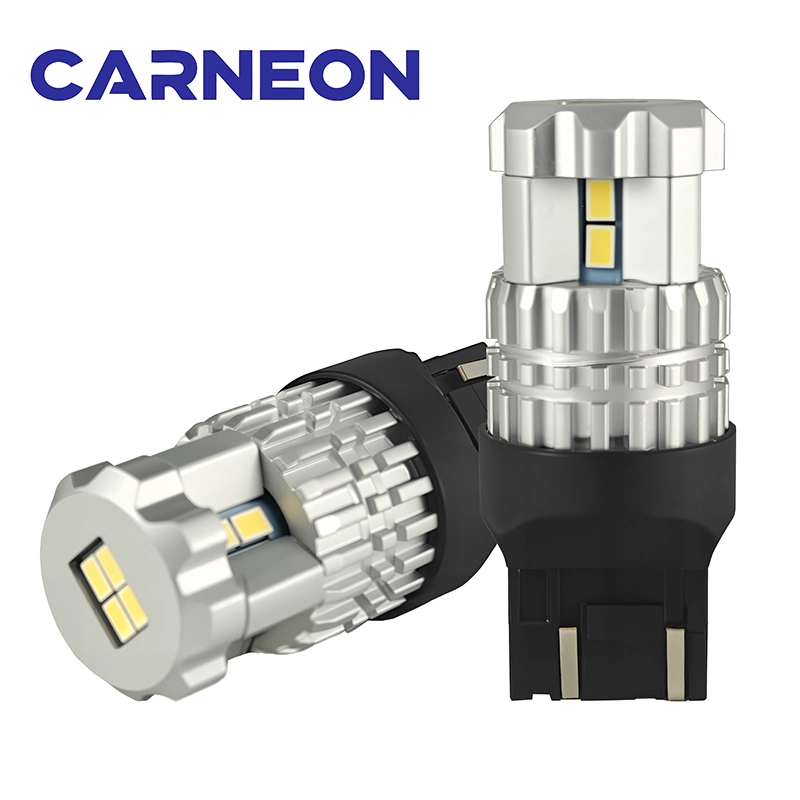
Carneon 7443 W21/5W LED Bulbs 3020 12SMD Super Bright T20 Car Light for Canbus Brake Tail Lights, Stop Lights, Reverse Lights, Signal Light
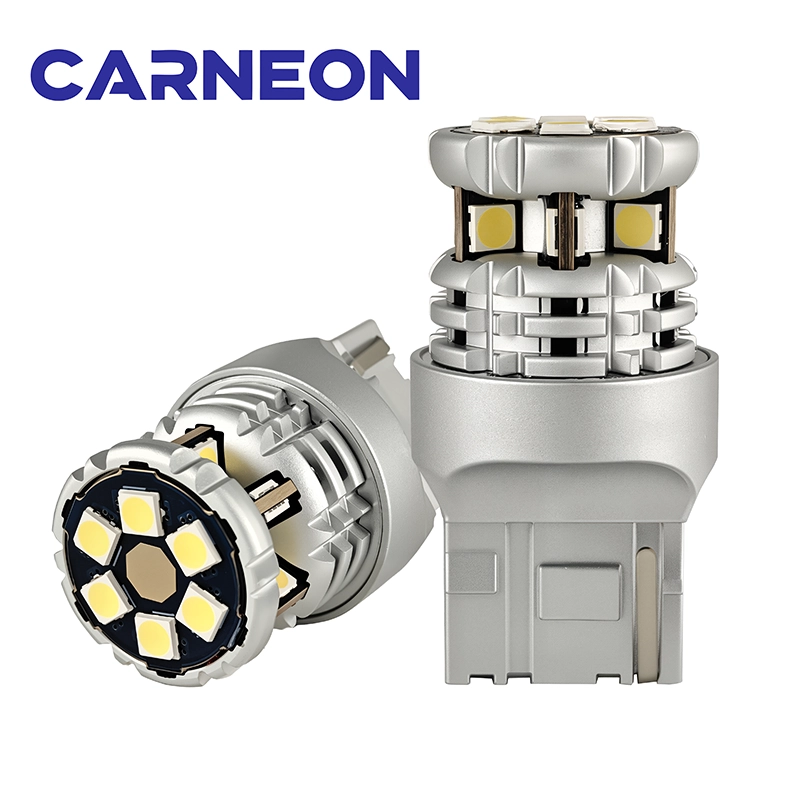
Carneon Super Bright 7440 W21W LED Replacement Bulbs T20 18SMD 3030- Xenon White for Car Reverse/Brake/Turn Signal Lights
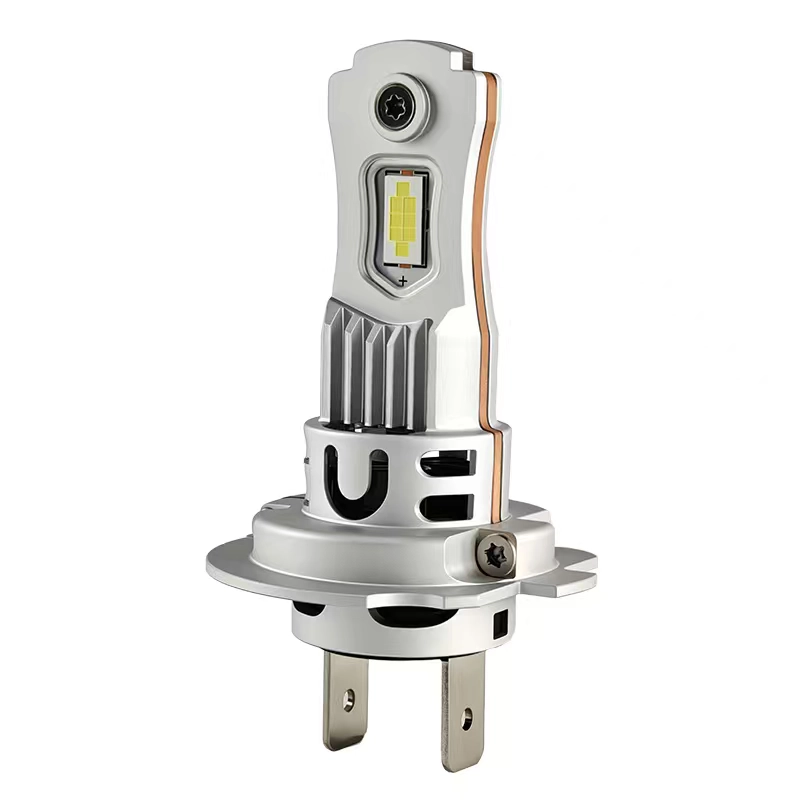
E1 plug&play led headlight – High-Performance & Customizable Solution for Led headlights
Get More Resources
Fill out the form to access product guides, industry news, and other resources to help you get the most out of our products.
Start Your Wholesale Order / Request OEM Solutions
Partner directly with the factory for competitive pricing and priority support. Please provide your business details and estimated order volume (MOQ applies) so our sales engineers can tailor the best quote for your market.
Contact us


6th Floor, Building B, Liando U Valley, No. 29, Bishan Street, Huangpu District, Guangzhou, China

© 2026 CARNEON. All Rights Reserved. Privacy Policy | Terms and Conditions | Sitemap

Whatsapp: +8618688487142