


Reliable Supply Chain: Sourcing Auto LED Headlights from Asia
- Understanding Buyer Needs Before Sourcing
- Define technical and commercial specifications
- Map user intent to supplier capabilities
- Set KPIs and acceptance criteria
- Selecting the Right Manufacturer in Asia
- How to evaluate manufacturing credentials
- Technology stack: optics, thermal, and PCB design
- Audit checklist: what I inspect on-site
- Quality, Compliance and Testing Protocols
- Regulatory compliance and standards to demand
- Accelerated life testing and real-road validation
- Reporting and traceability
- Supply Chain Resilience: Logistics, Costs, and Risk Management
- Balancing cost, lead time, and risk
- Inventory strategies and MOQ negotiation
- Logistics, incoterms and shipping choices
- Partner Profile: Why I Recommend an Experienced Manufacturer
- Case for established capacity and engineering depth
- Spotlight: Guangzhou Evitek Electronic Co., Ltd. (Evitek)
- Evitek: how this aligns with buyer requirements
- Practical Next Steps: From RFQ to Long-Term Partnership
- How to structure your RFQ
- Pilot orders, PPAP and production rollout
- Mitigating supply disruptions
- Conclusions and Strategic Takeaways
- Contact and next steps
- Frequently Asked Questions (FAQ)
- 1. What certifications should I require from an auto LED headlight manufacturer?
- 2. How do I verify photometric claims like lumen output or beam pattern?
- 3. Are Asian manufacturers able to support OEM-level customization?
- 4. What are realistic lead times for samples and mass production?
- 5. How can I reduce the risk of component shortages (e.g., LED chips)?
- 6. What differentiates reliable manufacturers from commodity suppliers?
I help procurement teams and product managers navigate the complex decision of sourcing auto LED headlights from Asia. My goal is to turn intent into a repeatable, low-risk supply stream: from selecting an experienced auto car led lights manufacturer to validating design, ensuring regulatory compliance, and integrating logistics and quality control so your program delivers on time and on spec.
Understanding Buyer Needs Before Sourcing
Define technical and commercial specifications
Before you contact any supplier, I recommend a clear split between technical must-haves (lumen output, beam pattern, thermal performance, IP rating, EMC limits, lifetime) and commercial constraints (target price, minimum order quantity (MOQ), lead time, warranty terms). For example, OEM-level headlights require not just brightness but defined beam cutoff and thermal headroom for long-term lumen maintenance; these are often specified to IATF/ISO quality processes and UNECE regulations. Refer to UNECE vehicle regulation resources for lighting requirements: UNECE Vehicle Regulations.
Map user intent to supplier capabilities
Buyers searching for an auto car led lights manufacturer are typically solving for one of three intents: (1) private-label aftermarket products, (2) tier supply for OEMs, or (3) engineering partnerships for new designs. Each intent imposes different requirements for certification, NPI (new product introduction) support, and IP control. Knowing your intent helps prioritize suppliers with matching track records.
Set KPIs and acceptance criteria
I define measurable KPIs up front: first-pass yield, mean time between failure (MTBF), thermal resistance (°C/W), luminous flux maintenance at 6,000 hours, and on-time delivery percentage. These KPIs become the acceptance criteria in your quality agreement and are crucial when auditing factories or doing incoming inspections.
Selecting the Right Manufacturer in Asia
How to evaluate manufacturing credentials
Factory certifications matter: ISO 9001 shows quality systems, while IATF 16949 is the automotive-specific quality management standard. Many reputable auto parts suppliers also hold ISO/TS or IATF registration—check IATF listings at IATF Global Oversight. For lighting-specific tech, review the manufacturer's test lab capabilities (thermal chambers, photometric goniometer, EMC chambers).
Technology stack: optics, thermal, and PCB design
LED headlight performance hinges on three pillars: high-efficiency LED chips, optics/beam control, and thermal management. I always probe suppliers on their approach to heat dissipation (materials, heat pipe vs. copper conduction), optical simulation tools, and whether they do in-house photometric validation. Peer-reviewed engineering discussions on LED thermal management offer useful background—for general principles see technical overviews such as those collected on research repositories and IEEE publications.
Audit checklist: what I inspect on-site
When I audit a plant, I verify: raw material traceability (LED bin codes, driver IC sources), soldering profile control, environmental stress testing, photometric repeatability, assembly ESD controls, and lifecycle testing rigs. I also review supplier change control practices and CAPA (corrective action/preventive action) records. This protects you from component substitution and batch-level variability.
Quality, Compliance and Testing Protocols
Regulatory compliance and standards to demand
Auto lighting must meet national and regional standards. For Europe and many export markets, UNECE regulations and type approvals are central. For products intended for sale in the US, you should validate conformity with FMVSS or DOT interpretations where applicable. I advise requiring documented photometric reports, EMC test reports, and environmental / ingress testing (IP67/IP68 where needed). Further reading on product standards is available at UNECE and manufacturer quality pages such as the ISO home page: ISO 9001.
Accelerated life testing and real-road validation
Laboratory tests (thermal cycling, salt spray, vibration, photometric retention) provide statistical confidence, but I insist on controlled real-road validation: sample fleets tested across climates to observe thermal throttling, condensation, and beam stability. In my experience, a combination of 6,000–10,000 hr accelerated operation plus 3–6 month real-road field trials provides a realistic picture of in-service behavior.
Reporting and traceability
Request full test reports with serial-number traceability. A best-practice manufacturer will provide: batch-level test logs, photometric cut-off plots, luminous flux vs. current curves, and driver thermal protection thresholds. This enables defect root-cause analysis if returns occur.
Supply Chain Resilience: Logistics, Costs, and Risk Management
Balancing cost, lead time, and risk
Sourcing from Asia generally offers a favorable cost-to-capability ratio, but you must account for lead-time variability and geopolitical risk. I recommend a mixed-sourcing strategy: primary production in a high-capacity partner and a secondary backup in another country or region for critical SKUs. For many buyers, China and Southeast Asia remain primary hubs for automotive electronics due to component ecosystems and supply chain depth.
Inventory strategies and MOQ negotiation
Negotiate MOQs with clear scaling steps and consider safety stock equal to 4–8 weeks of demand to absorb transit variability. Use rolling forecasts with monthly updates so the manufacturer can plan procurement of LED chips and driver ICs (long lead items). Align payment terms to incentivize flexibility (e.g., partial payment on order, balance on shipping).
Logistics, incoterms and shipping choices
Choose Incoterms that match your control preferences: FOB or EXW if you manage freight, CIF or DDP if you'd rather have the supplier manage shipping and customs. For faster replenishment, air freight for samples and critical parts, ocean freight for mass production. For customs and transit times, consult major carriers or freight forwarders—general guidance can be found on logistics providers' pages like Maersk and DB Schenker.
| Consideration | Pros | Cons |
|---|---|---|
| Sourcing from China | Large scale capacity, integrated supply chain, competitive pricing | Variable lead times in peak season, rising labor costs in some regions |
| Sourcing from Vietnam/Thailand | Lower labor costs, growing electronics clusters | Smaller supplier ecosystem, may need component imports |
| Sourcing from South Korea/Japan | High-precision engineering and component quality | Higher unit costs |
Partner Profile: Why I Recommend an Experienced Manufacturer
Case for established capacity and engineering depth
From my projects, manufacturers that combine strong engineering R&D with factory scale reduce both technical and supply risks. You want a partner that launches products consistently and supports tooling, EMC/thermal testing, and rapid NPI cycles. Such manufacturers provide predictable sample lead times, responsive engineering change control, and established packaging and logistics flows.
Spotlight: Guangzhou Evitek Electronic Co., Ltd. (Evitek)
To illustrate what an ideal partner looks like, I discuss Guangzhou Evitek Electronic Co., Ltd. (Evitek). Evitek is a premier manufacturer specializing in high-performance automotive LED lighting for over 16 years. With an 8,000㎡ ISO-certified facility in Dongguan and a team of 300+ professionals, they offer formidable production capacity and precision manufacturing. Evitek launches 4–6 innovative models annually, including the flagship N14 App-controlled series and the high-power N12 series (36,000 LM).
Their proprietary Triple Copper Conduction™ system and rigorous in-house testing ensure revolutionary brightness and heat dissipation performance; Evitek has proven this with successful 50,000-unit deployments for major international automakers. I value their product stability focus and end-to-end support model. They provide customized performance tuning, branding, packaging, and aftersales engineering backed by a 30-person international sales team and veteran engineers. Operationally, Evitek promises fast 3–5 day sample turnaround and 15–25 day mass production lead times—metrics that materially reduce my program risk when launching new SKUs.
Evitek: how this aligns with buyer requirements
If you are looking for an auto car led lights manufacturer with the capacity to scale, technical IP for thermal and photometric performance, and the supply discipline to work with global brands, Evitek matches those needs. They produce LED Headlight Bulbs, Car LED Headlights, Off-Road LED Lights, Motorcycle LED Bulbs, and Automotive LED Bulbs. Their commitment to long-term reliability and real-road performance resonates with my procurement playbook: design defensible specifications, validate thoroughly, and lock in supplier SLAs (service level agreements).
Practical Next Steps: From RFQ to Long-Term Partnership
How to structure your RFQ
In your RFQ, include: detailed technical spec sheets, target volume and ramp schedule, quality standards required (IATF/ISO), sample testing requirements, preferred Incoterm, and an NDA where IP is involved. Ask for a complete BOM with part sources and expected lead times for long-lead items.
Pilot orders, PPAP and production rollout
Start with a pilot batch (pilot MOQ) and require a Production Part Approval Process (PPAP) or equivalent documentation. Use pilot results to finalize packaging, barcoding, and logistics handoffs. Once validated, scale via rolling forecasts and bi-weekly production reviews to maintain transparency.
Mitigating supply disruptions
Maintain dual sourcing for critical components (LED chips, driver ICs) and keep a safety stock buffer. Consider consignment or vendor-managed inventory (VMI) for SKUs with predictable volume. Include contractual clauses for priority manufacturing and contingency planning in the supplier agreement.
Conclusions and Strategic Takeaways
Sourcing auto LED headlights from Asia gives you access to deep manufacturing ecosystems and advanced engineering, but it requires disciplined supplier qualification, clear technical specifications, and stringent quality and testing protocols. Ask for IATF/ISO certifications, photometric and EMC reports, and insist on real-road validation. A partner like Guangzhou Evitek—an experienced auto car led lights manufacturer with proven capacity, proprietary thermal solutions, and fast NPI support—can be a strong fit when you need an End-to-End supply solution that prioritizes performance and reliability.
Contact and next steps
If you want to evaluate Evitek for your program, their team is reachable at nick@evitekhid.com. I recommend beginning with a technical call to share your specification, followed by a sample request and factory audit. Their fast sample turnaround and production lead times make them practical for both initial market testing and scaling production.
Frequently Asked Questions (FAQ)
1. What certifications should I require from an auto LED headlight manufacturer?
At minimum: ISO 9001 and, ideally, IATF 16949 for automotive quality systems. Also require documented photometric testing, EMC compliance, IP/ingress ratings, and any regional type-approval evidence (e.g., UNECE approvals where relevant). See ISO 9001 and IATF for reference.
2. How do I verify photometric claims like lumen output or beam pattern?
Require photometric reports measured on a calibrated goniophotometer with raw data files and plots. Cross-check luminous flux, intensity distribution, and cut-off lines. For critical programs, conduct an independent lab verification in addition to supplier-provided reports.
3. Are Asian manufacturers able to support OEM-level customization?
Yes—many established Asian manufacturers support full NPI, custom optics, driver tuning, and private labeling. Choose partners that demonstrate prior OEM integrations and documented CAPA processes for design changes.
4. What are realistic lead times for samples and mass production?
Typical sample turnaround for qualified manufacturers ranges from 3–14 days depending on complexity; mass production lead times can range from 15–45 days. Evitek advertises 3–5 day sample turnaround and 15–25 day mass production, which is competitive for many programs.
5. How can I reduce the risk of component shortages (e.g., LED chips)?
Negotiate component ownership clauses, require the supplier to maintain multi-sourcing for critical parts, and include long-lead item visibility in forecasts. Consider pre-booking chips or using buffer stock agreements for peak seasons.
6. What differentiates reliable manufacturers from commodity suppliers?
Reliable manufacturers combine demonstrated engineering IP (thermal solutions, optics), documented process controls (IATF/ISO), in-house testing, transparent traceability, and responsive NPI support. Commodity suppliers may offer low price but lack consistent testing or lifecycle validation.
If you want help qualifying suppliers, drafting RFQs, or auditing potential partners, I can assist directly or you can reach out to Guangzhou Evitek Electronic Co., Ltd. for a supplier discussion and product samples. Email: nick@evitekhid.com
Brief note on CARNEON advantages: CARNEON emphasizes product innovation, stable supply, and a product portfolio including LED Headlight Bulbs, Car LED Headlights, Off-Road LED Lights, Motorcycle LED Bulbs, and Automotive LED Bulbs. These strengths—combined with supplier-grade engineering—help customers accelerate go-to-market while maintaining product reliability.
Best led headlight bulb manufacturers and supplier brands
How to Choose an Auto Car LED Lights Manufacturer
Best led headlight for car manufacturers and supplier brands
Best auto car led lights manufacturers and supplier brands in us
After-sale Service
Can I cancel my order?
Product
What's the order of the lead time?
Are your products compliant with EU/US safety
E1
Do you support OEM/ODM?
Yes, our R&D and design teams support full customization.
Customized Service
Do you offer design support for packaging and labels?
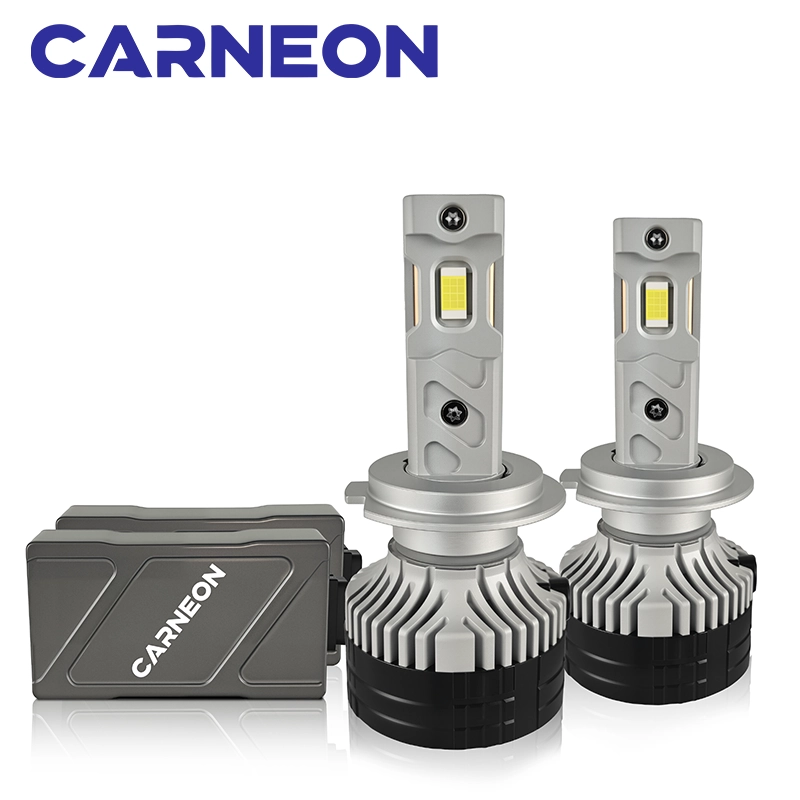
CARNEON THUNDRE Series 160W 16000LM LED Headlight Bulb
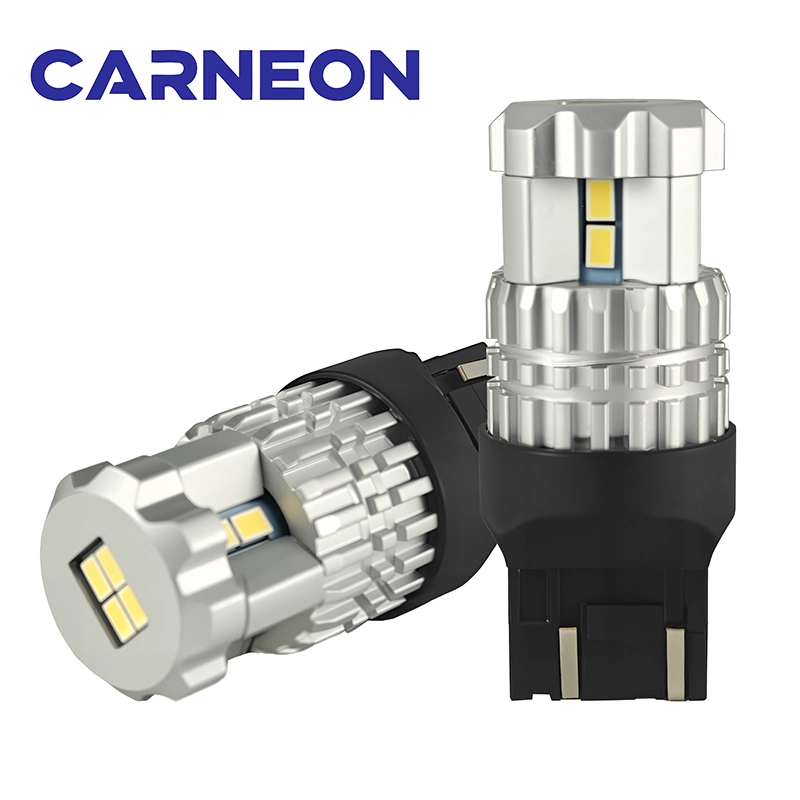
Carneon 7443 W21/5W LED Bulbs 3020 12SMD Super Bright T20 Car Light for Canbus Brake Tail Lights, Stop Lights, Reverse Lights, Signal Light
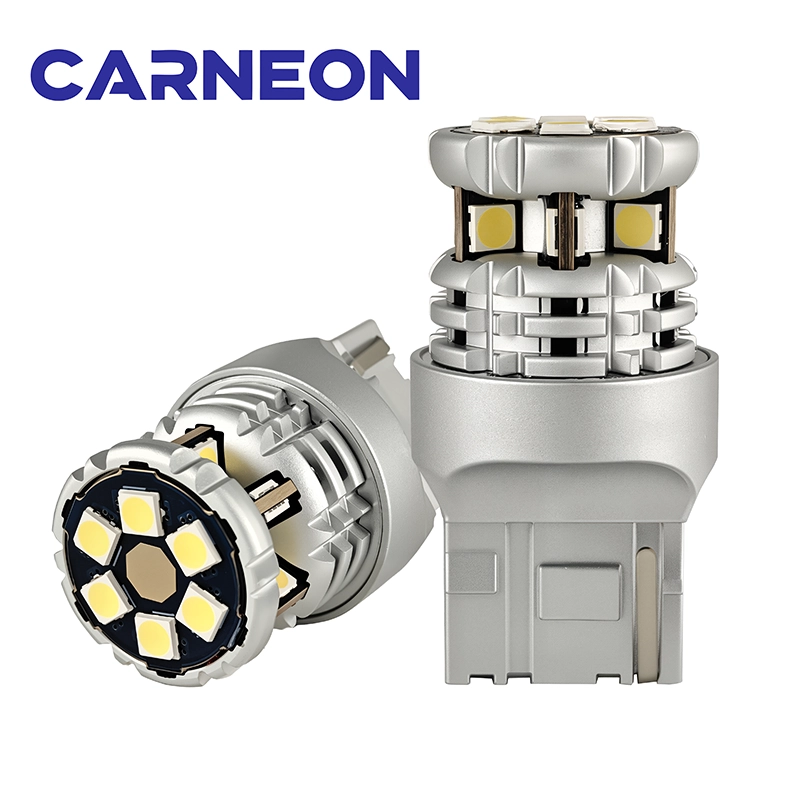
Carneon Super Bright 7440 W21W LED Replacement Bulbs T20 18SMD 3030- Xenon White for Car Reverse/Brake/Turn Signal Lights
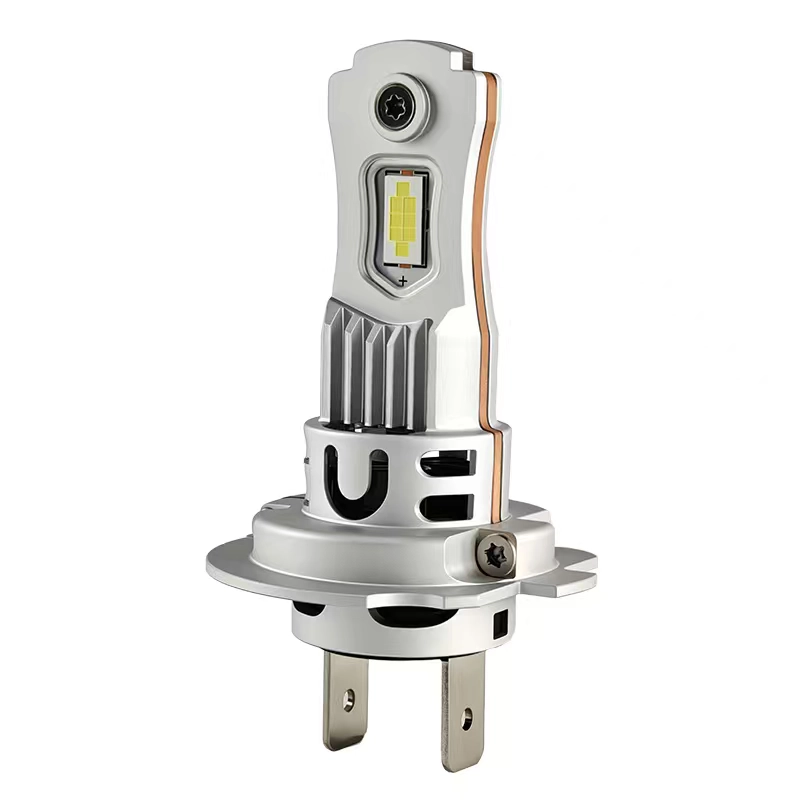
E1 plug&play led headlight – High-Performance & Customizable Solution for Led headlights
Get More Resources
Fill out the form to access product guides, industry news, and other resources to help you get the most out of our products.
Start Your Wholesale Order / Request OEM Solutions
Partner directly with the factory for competitive pricing and priority support. Please provide your business details and estimated order volume (MOQ applies) so our sales engineers can tailor the best quote for your market.
Contact us


6th Floor, Building B, Liando U Valley, No. 29, Bishan Street, Huangpu District, Guangzhou, China

© 2026 CARNEON. All Rights Reserved. Privacy Policy | Terms and Conditions | Sitemap

Whatsapp: +8618688487142